Sameh Cartoon · Editorial Cartoons
Gezichtsuitdrukkingen en Karikatuur Tekenen Workshop
Capturing the essence of facial expressions in caricature is an art that blends keen observation with playful exaggeration. This curated selection of editorial cartoons showcases how subtle shifts in eyes, brows, and mouths can transform a simple sketch into a vivid story, revealing character and emotion with wit and precision. Dive into the world where every line and curve speaks louder than words, making faces unforgettable and messages unmistakably clear.




A curated visual editorial page about "Gezichtsuitdrukkingen tekenen in karikatuur", supported by 18 relevant cartoons by Sameh Samir.
De kracht van gezichtsuitdrukkingen in karikatuurtekenen
In de wereld van karikaturen zijn gezichtsuitdrukkingen het belangrijkste communicatiemiddel. Ze geven niet alleen de emotie van het onderwerp weer, maar versterken ook de humor, satire of kritiek die de tekenaar wil overbrengen. Het overdrijven van bepaalde trekken en emoties maakt het mogelijk om een boodschap direct en krachtig over te brengen. Deze selectie uit onze cartoonbibliotheek toont hoe verschillende kunstenaars met minimale lijnen maximale expressie bereiken.
Waarom gezichtsuitdrukkingen essentieel zijn
Een karikatuur zonder duidelijke gezichtsuitdrukking mist impact. Of het nu gaat om woede, verbazing, vreugde of sarcasme, de emotie moet meteen herkenbaar zijn. Door te spelen met de grootte van ogen, mond, wenkbrauwen en andere kenmerken, kan een tekenaar de persoonlijkheid en het gevoel van het onderwerp versterken. Dit is vooral belangrijk in politieke of sociale cartoons, waar de boodschap snel moet overkomen.
Technieken voor het tekenen van expressieve gezichten
Een effectieve karikatuur begint bij het observeren van de unieke kenmerken van een gezicht. Vervolgens worden deze kenmerken uitvergroot of vervormd om de expressie te versterken. Denk aan het optrekken van één wenkbrauw, het openen van de mond in een overdreven lach, of het samenvouwen van het voorhoofd bij frustratie. Het gebruik van lijnen en schaduwen speelt ook een grote rol in het benadrukken van emoties.
Daarnaast helpt het om te begrijpen welke emoties universeel herkenbaar zijn en hoe deze vertaald kunnen worden in visuele elementen. Bijvoorbeeld, grote ronde ogen staan vaak voor verbazing of angst, terwijl samengeknepen ogen juist wantrouwen of boosheid suggereren. Het combineren van deze elementen met een speelse overdrijving maakt de karikatuur levendig en aansprekend.
Karikatuur tekenen in Buggenhout: een praktische benadering
Voor wie deze vaardigheden wil ontwikkelen, is een tekenles in Buggenhout een uitstekende keuze. Hier wordt niet alleen aandacht besteed aan de technische aspecten van gezichtsuitdrukkingen tekenen, maar ook aan het creatieve proces achter karikatuurtekenen. De workshops bieden een hands-on ervaring waarbij deelnemers leren hoe ze hun observaties kunnen omzetten in humoristische en treffende beelden.
De lessen zijn geschikt voor zowel beginners als gevorderden en richten zich op het verbeteren van het visuele vocabulaire. Door het analyseren van voorbeelden uit onze cartoonbibliotheek en het maken van eigen schetsen, krijgen cursisten inzicht in de dynamiek van expressie en vorm. Dit maakt het mogelijk om met vertrouwen en originaliteit te werken aan eigen karikaturen.
Symboliek en overdrijving in gezichtsuitdrukkingen
In karikaturen gaat het niet alleen om het letterlijk weergeven van een gezicht, maar ook om het symbolisch versterken van een boodschap. Overdreven gezichtsuitdrukkingen dragen bij aan het benadrukken van karaktereigenschappen of maatschappelijke kritiek. Bijvoorbeeld, een overdreven frons kan wijzen op ontevredenheid over politieke beslissingen, terwijl een brede grijns ironie of sarcasme kan uitdrukken.
Deze symboliek maakt karikaturen krachtig en toegankelijk voor een breed publiek. Het gebruik van humor en herkenbare emoties zorgt ervoor dat de boodschap blijft hangen en aanzet tot nadenken. Onze selectie toont hoe verschillende kunstenaars deze technieken toepassen om actuele thema’s visueel te verbeelden.
Een blik op de artistieke aanpak
Elke karikaturist heeft zijn eigen stijl en aanpak bij het tekenen van gezichtsuitdrukkingen. Sommigen kiezen voor strakke lijnen en minimalistische details, terwijl anderen juist spelen met rijke texturen en complexe schaduwwerking. Wat ze gemeen hebben, is het vermogen om met een paar krachtige lijnen een herkenbare emotie neer te zetten.
Door onze cartoonbibliotheek te doorzoeken, zie je een breed scala aan stijlen en technieken. Dit biedt inspiratie en inzicht in hoe je zelf kunt experimenteren met expressie en vorm. Het is een uitnodiging om te ontdekken hoe je met creativiteit en observatie een eigen visuele taal ontwikkelt.
Tot slot: een uitnodiging voor tekenliefhebbers
Ben je geïnteresseerd geraakt in het tekenen van gezichtsuitdrukkingen en karikaturen? Overweeg dan een workshop of tekenles in Buggenhout. Hier leer je niet alleen de technische vaardigheden, maar ook hoe je jouw persoonlijke stijl kunt ontwikkelen en versterken. De lessen bieden een unieke kans om te groeien als kunstenaar en je eigen stem te vinden in de wereld van karikatuurtekenen.
Deze pagina is een zorgvuldig samengestelde selectie uit onze uitgebreide collectie cartoons, bedoeld om je te inspireren en te begeleiden in het creatieve proces. Laat je verrassen door de kracht van expressie en ontdek hoe je met een paar lijnen een heel verhaal kunt vertellen.
Rose El-Youssef, Sabah El-Kheir, Al-Masry Al-Youm + internationale platforms
Gezichtsuitdrukkingen tekenen in karikatuur
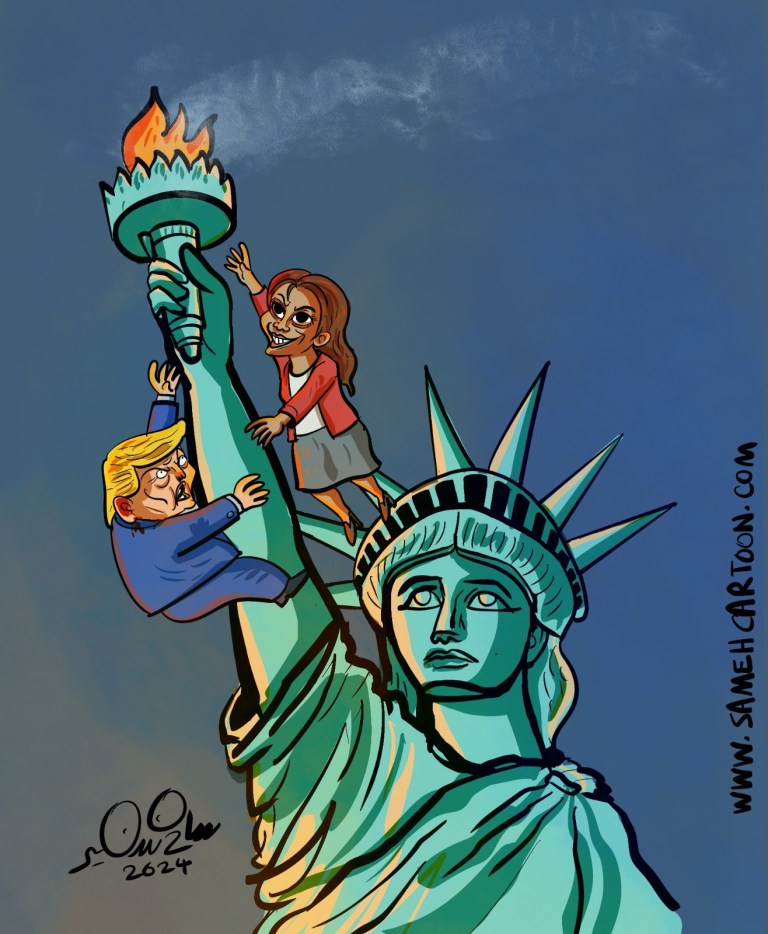
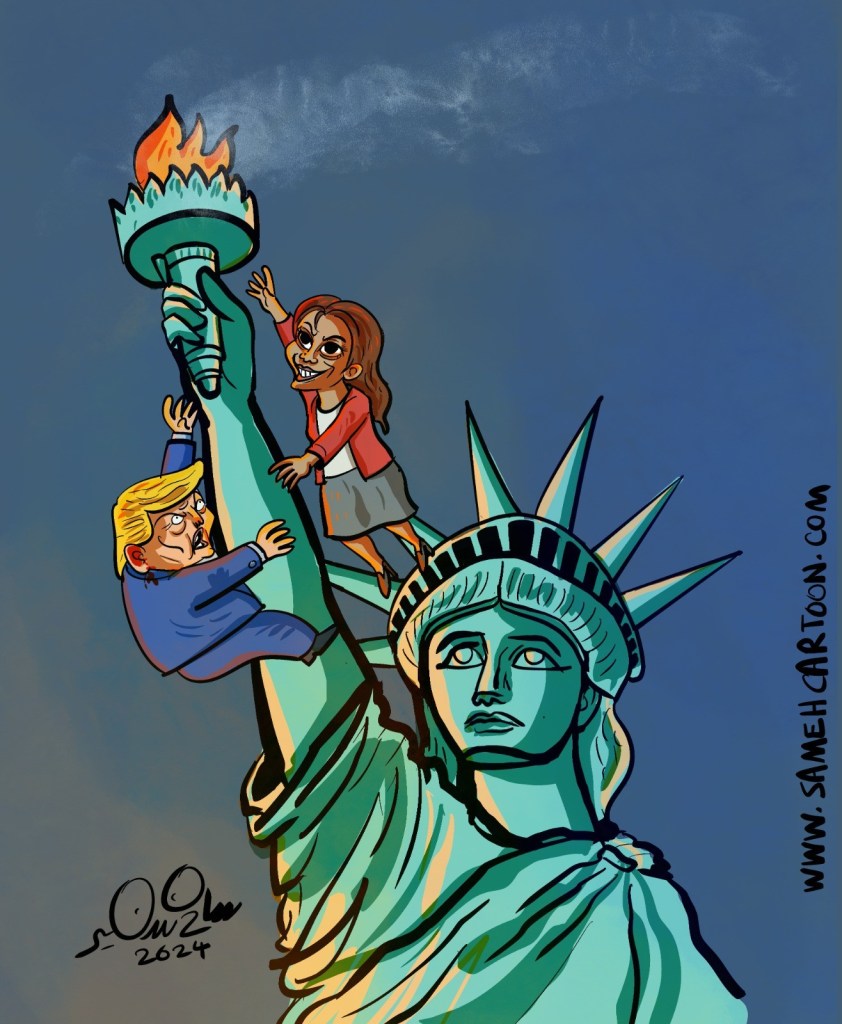
Trump and Harris Compete Atop the Statue of Liberty
This Sameh Cartoon illustration vividly portrays Donald Trump and Kamala Harris locked in a humorous and exaggerated contest atop the Statue of Liberty. The cartoon uses satire to highlight their political rivalry and the broader struggle for leadership in the United States, set against the symbol of American freedom.

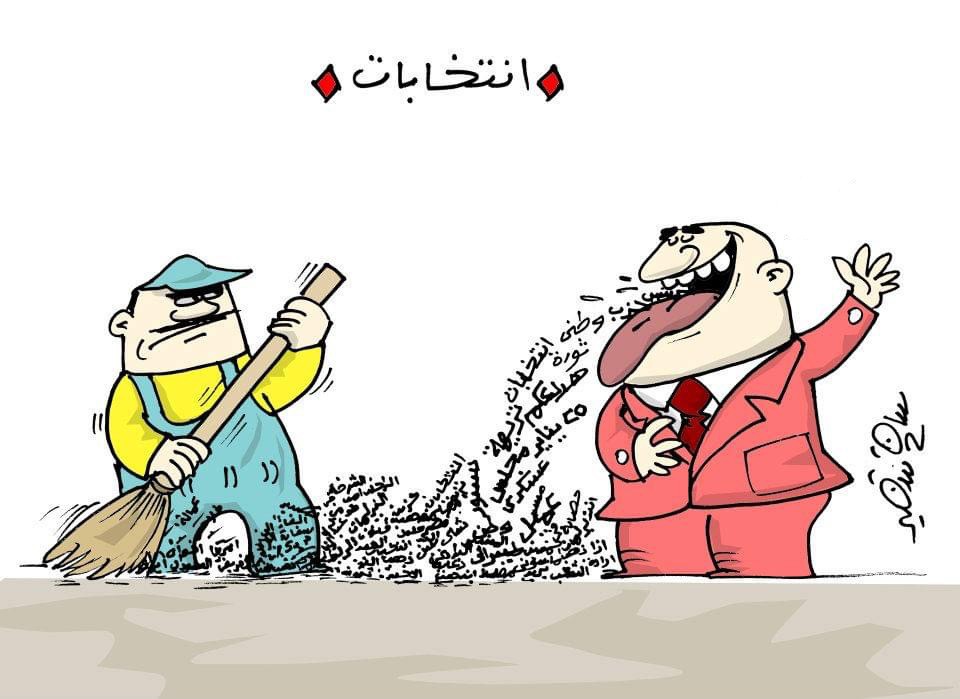
Political Cartoon on Elections and Hidden Issues
This political cartoon by Sameh Cartoon cleverly depicts the common practice of politicians sweeping important issues under the rug during election campaigns. Using humor and satire, it highlights the disconnect between political promises and reality. A sharp commentary on election season tactics.
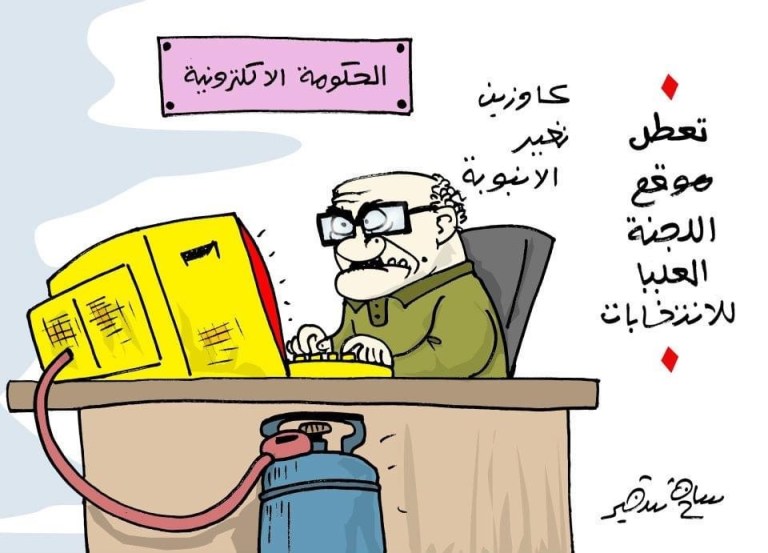
Cartoon Showing Election Frustration with Malfunctioning Website
This political cartoon by Sameh Cartoon highlights the common frustration voters face with malfunctioning election websites. Using humor, it sheds light on the challenges in the election process, making it relatable and engaging for viewers interested in political satire.

Double Meaning: Parliamentary Candidates and Leaks
This uses sharp satire to comment on parliamentary misconduct. By illustrating the parliament building atop a leaking sewage pipe, it plays on the dual meaning of 'candidate'—as both an elected official and a leak—suggesting that the real source of the problem is the MPs themselves, not the infrastructure. The citizens' remarks highlight public disillusionment with political representatives.

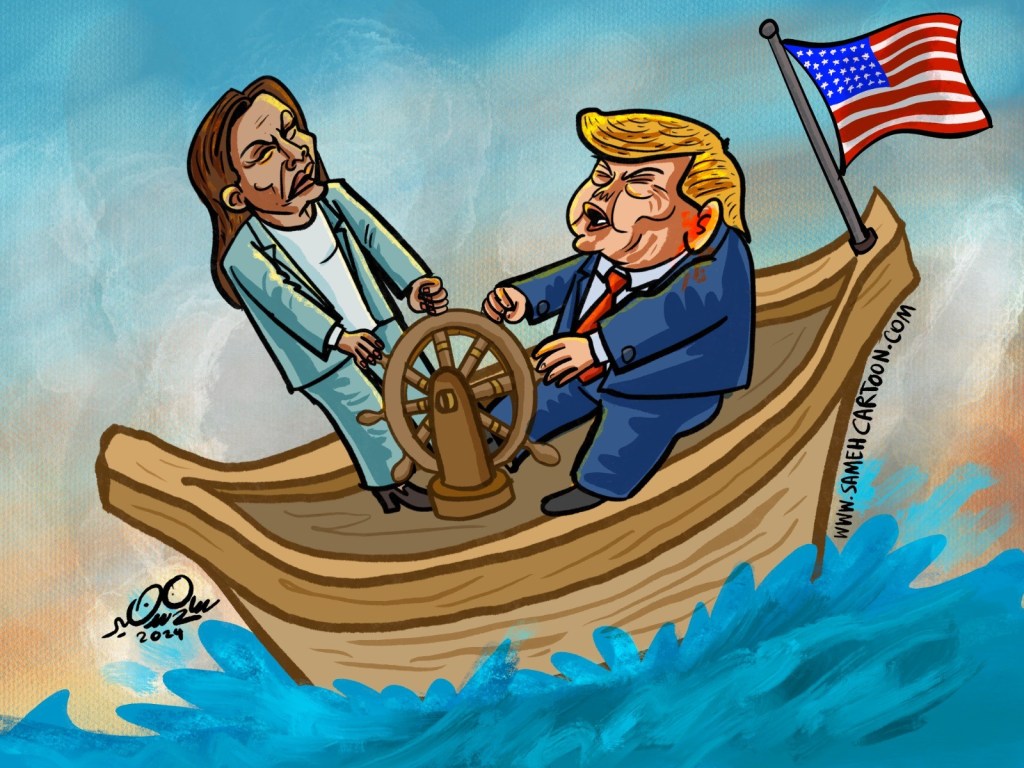
Trump and Harris in a Chaotic Boat: Political Cartoon Satire
This satirical depicts Donald Trump steering a boat while Kamala Harris gestures energetically beside him, both vying for control amid a backdrop of the American flag. The illustration uses humor to spotlight the tumultuous nature of U.S. political leadership. Illustration by Sameh Samir.
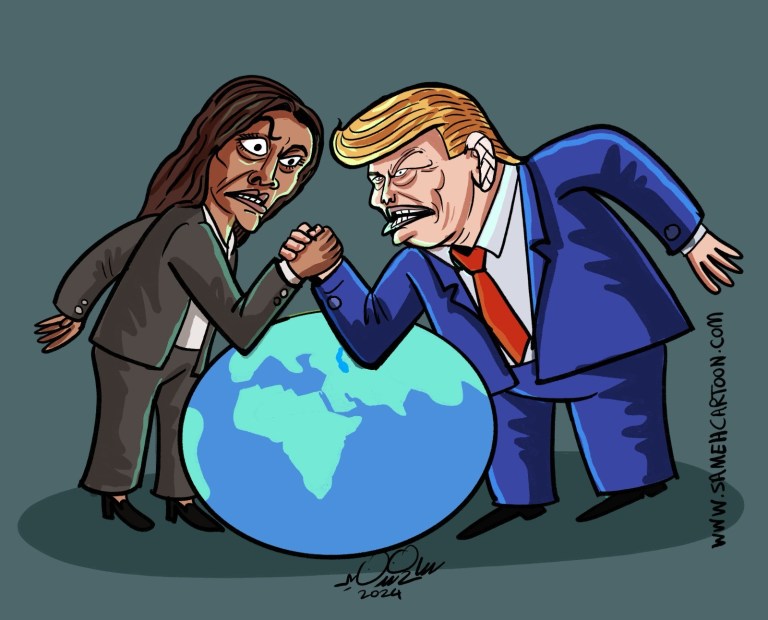
Trump and Harris Arm Wrestling Over the Globe Cartoon
This vividly portrays Donald Trump and Kamala Harris locked in an arm wrestling match with a globe between them, highlighting the fierce political rivalry and the ongoing contest for international influence. The illustration uses humor and satire to comment on the dynamics of global power.
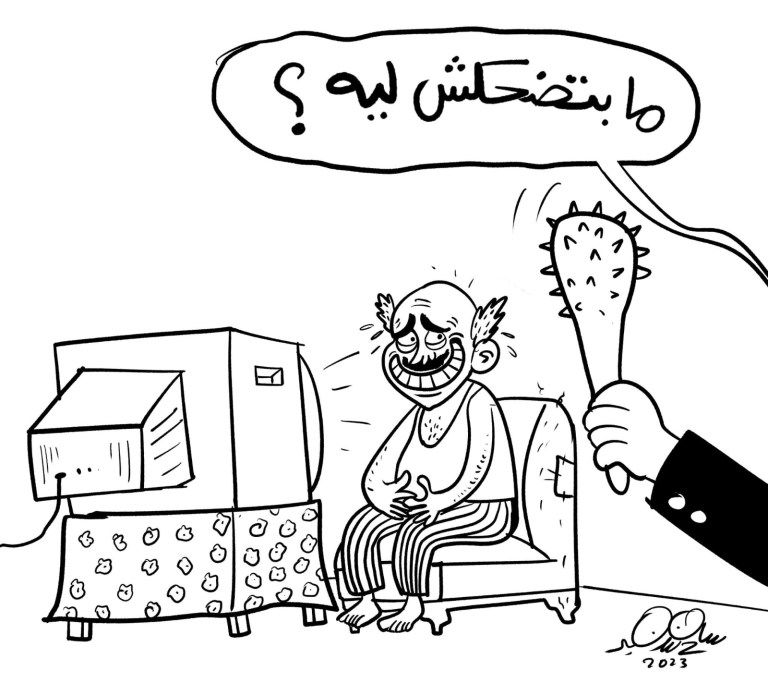
Forced Laughter: Media, Comedy, and Authority
In this , a man is shown nervously laughing at a TV while another person threatens him with a spiked club, demanding, 'Why aren't you laughing?' The artwork humorously exposes the use of state-directed media and comedy to distract from economic issues, emphasizing the tension between genuine emotion and forced entertainment.
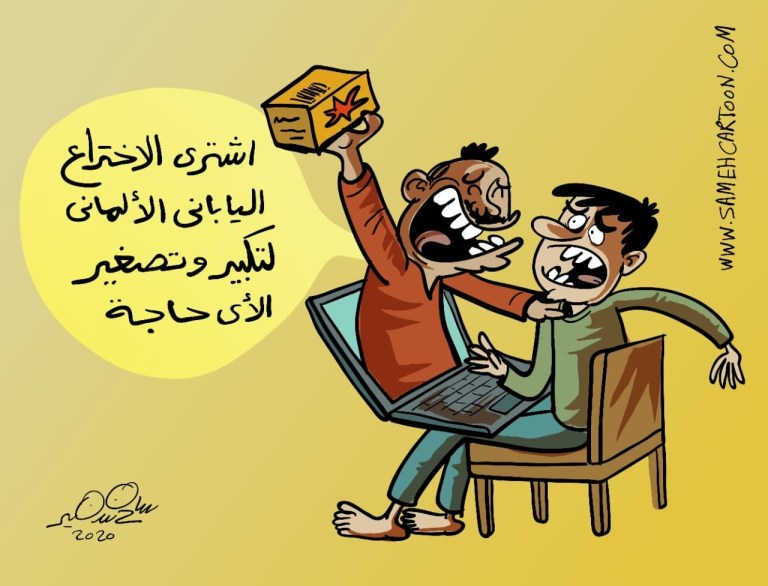
Satirical Cartoon on Misleading Online Ads Featuring a Japanese-German Invention
In this detailed cartoon, an excited figure emerges from a laptop to promote a Japanese-German invention that claims to increase or decrease anything, capturing the relentless and deceptive nature of spam and misleading ads on the internet. The artwork by Sameh Cartoon uses humor and exaggeration to raise awareness about the prevalence and absurdity of such online advertisements.
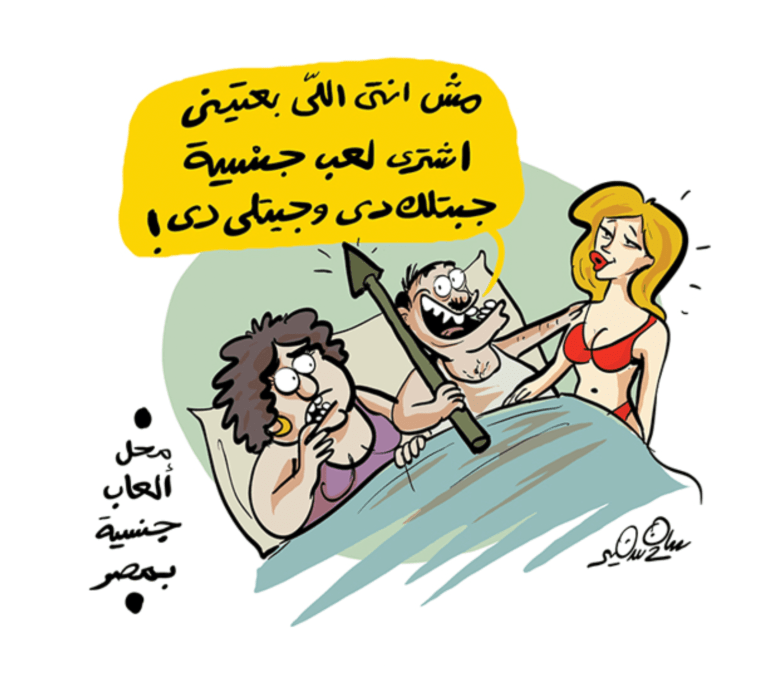
Cartoon: Man Buys Himself a Real Woman and a Spear for His Wife from a Sex Toy Shop
This humorously depicts a man who, after being sent by his wife to buy sex toys, returns with a spear for her and a real woman for himself from a new shop. The scene uses playful satire to comment on Egyptian societal reactions to adult stores, blending comedy with social observation.

Humorous Cartoon Warning of Danger Near Televisions
This cartoon by Sameh Cartoon humorously highlights the potential dangers of media consumption by depicting a warning sign that labels the area around televisions as a minefield. The image uses satire to comment on how media can be a hazardous environment, especially relevant in an Egyptian societal context where media influence is significant.
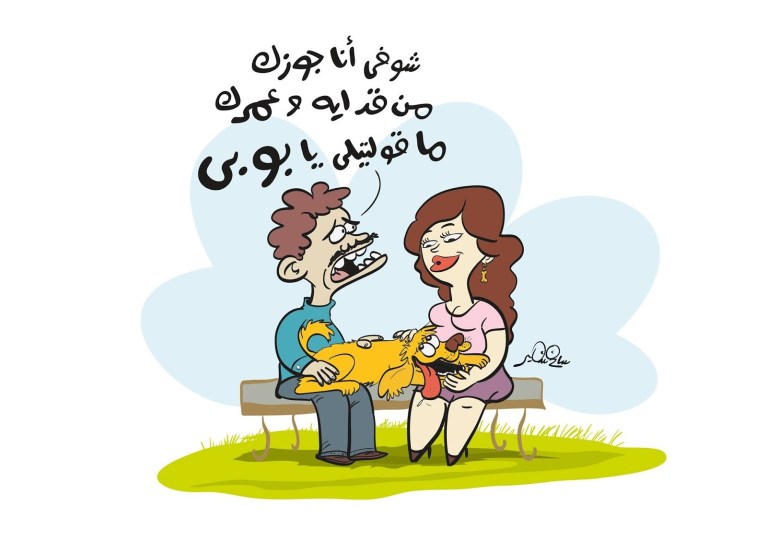
Husband Jealous of Wife Pampering Dog Named Bobby
This cartoon depicts a husband scolding his wife because she affectionately calls their dog 'Bobby,' but he is jealous as he loves that nickname and wants her to pamper him the same way. The scene humorously reflects contradictions in marital relationships and pet pampering in Egyptian society. This witty satire is brought to you by Sameh Samir.
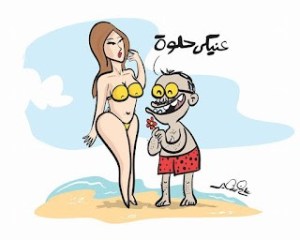
Short Man with Swimsuit Glasses Compliments Woman's Eyes at Beach
In this cartoon by Sameh Cartoon, a short man wearing glasses that look like a swimsuit top mistakes a woman's chest for her eyes and says, 'Your eyes are beautiful.' The scene humorously reflects social interactions on Egyptian beaches.
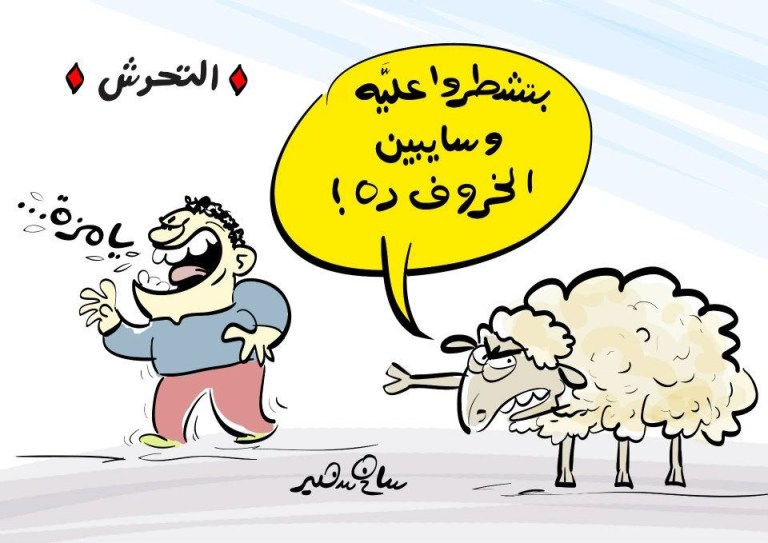
Satirical Cartoon on Harassment During Eid Al-Adha and the Wrongly Accused Sheep
This cartoon by Sameh Cartoon highlights the harassment phenomenon in Egyptian society during Eid Al-Adha with sharp satire. The sheep ironically points out how innocent victims are blamed while real harassers remain unpunished. It strongly criticizes the misuse of the term "sheep" against innocents and the societal failure to hold true offenders accountable during the festive period.
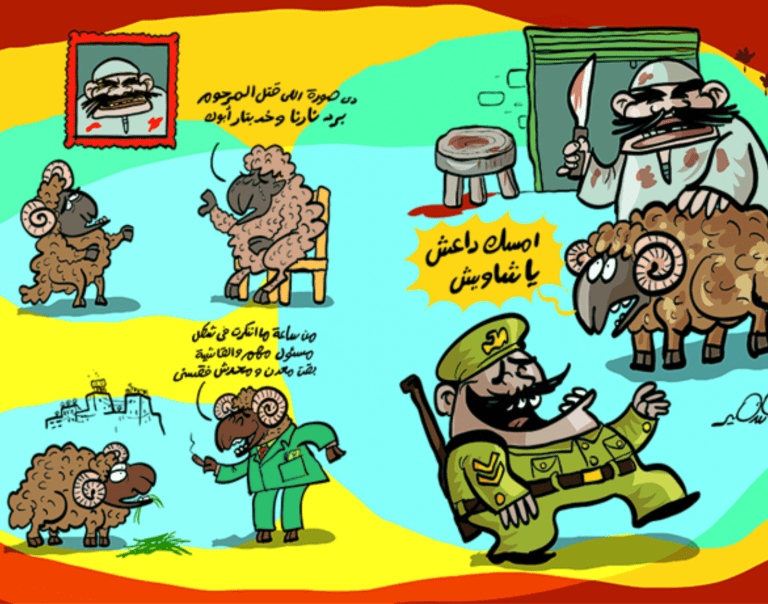
Satirical Cartoon on Eid al-Adha Highlighting Sheep Paradoxes and Corruption
This 2013 cartoon uses the symbolism of sheep during Eid al-Adha to satirize social and political issues in Egypt, including the rise of ISIS, calls for revenge, and corruption disguised as official authority. The butcher sheep, the grieving mother, and the sheep in a suit reflect deep societal paradoxes and critique of leadership.
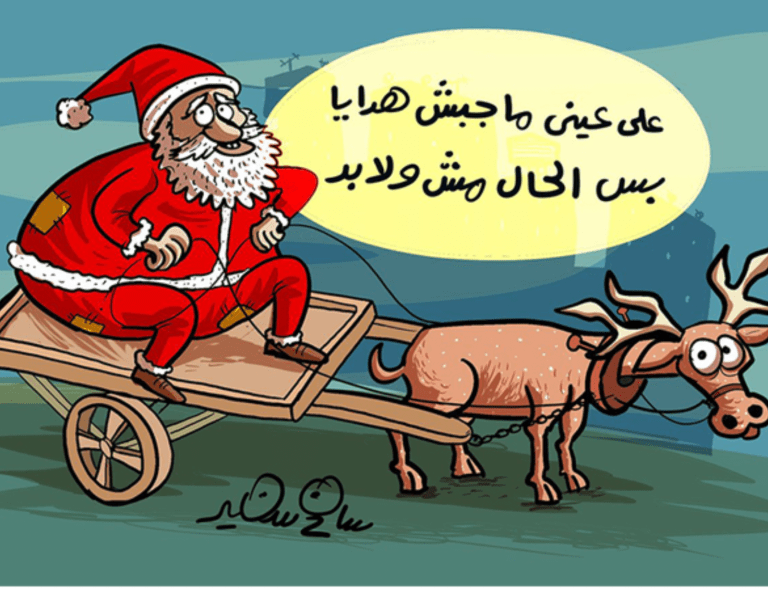
Poor Santa on Egyptian Wooden Cart Highlights Economic Hardship
This cartoon by Sameh Cartoon depicts a poor Santa Claus riding a traditional Egyptian wooden cart pulled by a reindeer. Santa says, "It hurts that I didn't bring gifts because the situation is very bad," blending festive imagery with dark humor to spotlight Egypt's harsh economic conditions.

Cartoon of Donkey Teacher Scolding Student at 'Abu Al-Mafhoumiya' Center
This cartoon depicts a donkey representing a teacher at the 'Abu Al-Mafhoumiya' tutoring center, angrily insulting a student by calling him a donkey and saying he doesn't understand. The name 'Abu Al-Mafhoumiya' sarcastically refers to the tutoring center's questionable educational quality. The scene uses animal metaphor and humor to critique the teaching approach. This work is by Sameh Samir.

Cartoon of a Man with TV Antenna Horns Installed by Television
This cartoon uses satire to show a television placing antenna horns on a man's head, symbolizing how media can manipulate and transform people into obedient followers, much like sheep. The image highlights the influence of television in shaping public perception and conformity. From the Sameh Cartoon archive.
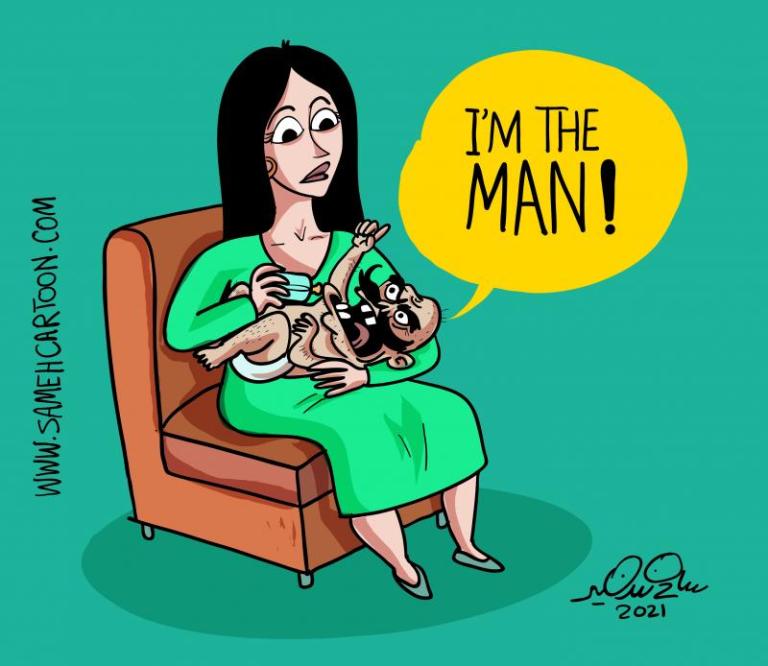
Cartoon Highlighting Male Entitlement and Gendered Upbringing
This humorously exposes how boys are often raised to believe their value is higher simply because they are male. The exaggerated adult face on the baby and the bold statement 'I'm the man!' shed light on the roots of male entitlement and the impact of gendered upbringing in society. Created by Sameh Samir.
Related cartoon pages and context
This selection connects to wider editorial cartoon collections, workshop/event pages, and Sameh Samir’s professional profiles.
Latest Cartoons & Visual Stories
Browse recent cartoon posts and curated visual stories.
About Sameh Samir
Read more about the cartoonist behind the work.
Awareness Cartoons
Cartoons for social impact, education and public awareness.
Political Cartoons
Editorial satire and visual commentary on power and public life.
Community Cartoons
Social behavior, public life and everyday visual satire.
World Cartoons
International editorial commentary through visual satire.
Sameh Cartoon on Cartoon Movement
International cartoon platform profile.
Artwork and editorial cartoons by Sameh Samir. All rights reserved.