Sameh Cartoon · Editorial Cartoons
FGM Criminalization Cartoon Signals
This curated selection of editorial cartoons offers a sharp, thoughtful look at the complex and urgent issue of criminalizing female genital mutilation. Through wit and insight, these illustrations challenge cultural norms and legal debates, highlighting the tension between tradition and human rights. Each cartoon invites reflection on the global struggle to protect women and girls, using humor and artistry to illuminate a difficult conversation with clarity and courage.



A curated visual editorial page about "FGM Criminalization", supported by 18 relevant cartoons by Sameh Samir.
Editorial Note
Female Genital Mutilation (FGM) is a harmful practice that violates the rights and health of millions of girls and women worldwide. Despite laws criminalizing it, FGM persists due to deep-rooted cultural beliefs and social pressures. This curated page presents a powerful selection from Sameh Samir’s cartoon library, each piece thoughtfully created to raise awareness, provoke dialogue, and inspire change. These cartoons serve as a visual editorial on the brutality of FGM and the urgent need for its eradication.
The Brutality Behind the Tradition
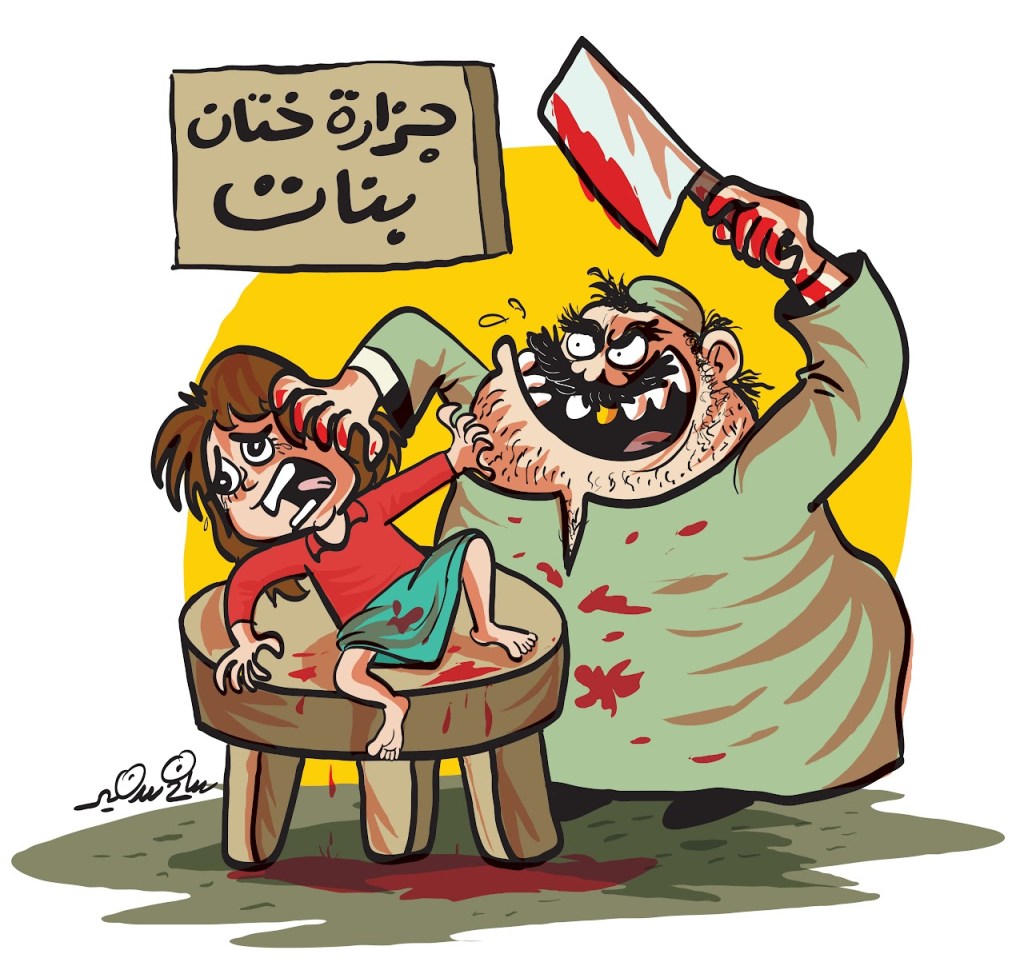
One of the most striking cartoons uses the metaphor of a butcher shop to illustrate the violent nature of FGM. The imagery evokes the raw physical harm inflicted on girls, framing the practice as a form of bodily mutilation rather than a cultural rite. This visual metaphor challenges the viewer to confront the gruesome reality behind the tradition, stripping away any romanticized or sanitized narratives often used to justify it.
Generational Chains of Harm
Another poignant cartoon depicts a grandmother, mother, and daughter linked in a chain, symbolizing how FGM is passed down through generations. This representation highlights the cyclical nature of the practice, where women who have suffered it may unknowingly perpetuate it on their daughters. The artwork calls for breaking this cycle through education, awareness, and legal enforcement, emphasizing that societal change is essential to protect future generations.
Legal Perspectives and Health Risks
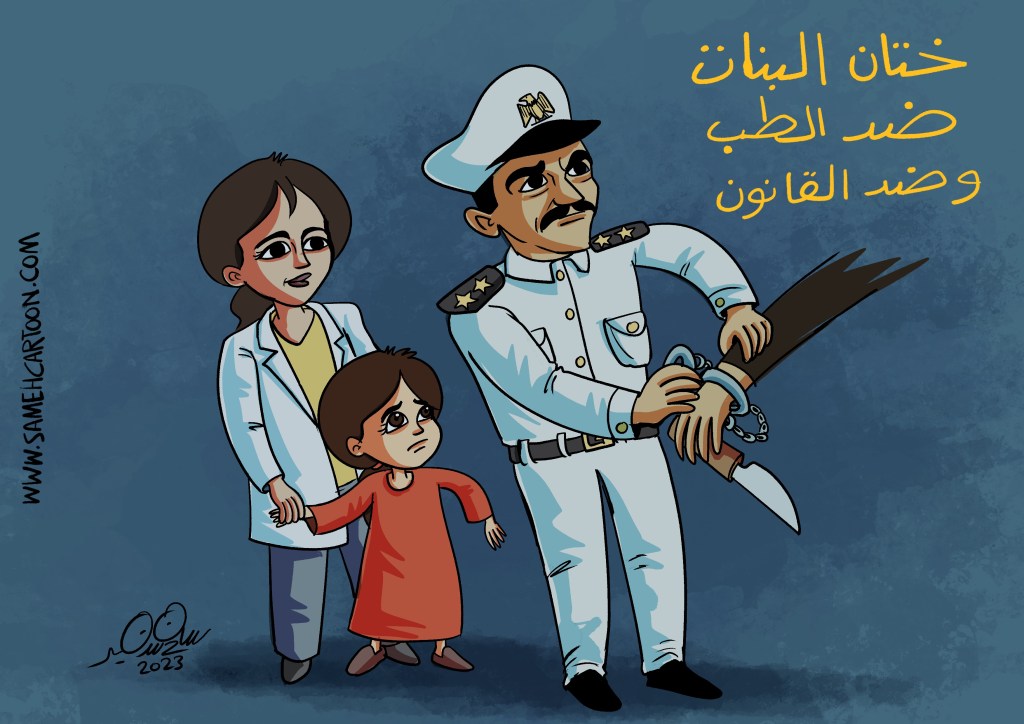
Several cartoons incorporate figures such as police officers and doctors to underscore the legal and medical dimensions of FGM. These images remind the public that female circumcision is not only medically harmful but also illegal under Egyptian law and international human rights standards. By visually linking law enforcement and healthcare professionals, the cartoons advocate for stronger community education and support systems to safeguard girls’ well-being.
Challenging Misguided Protection
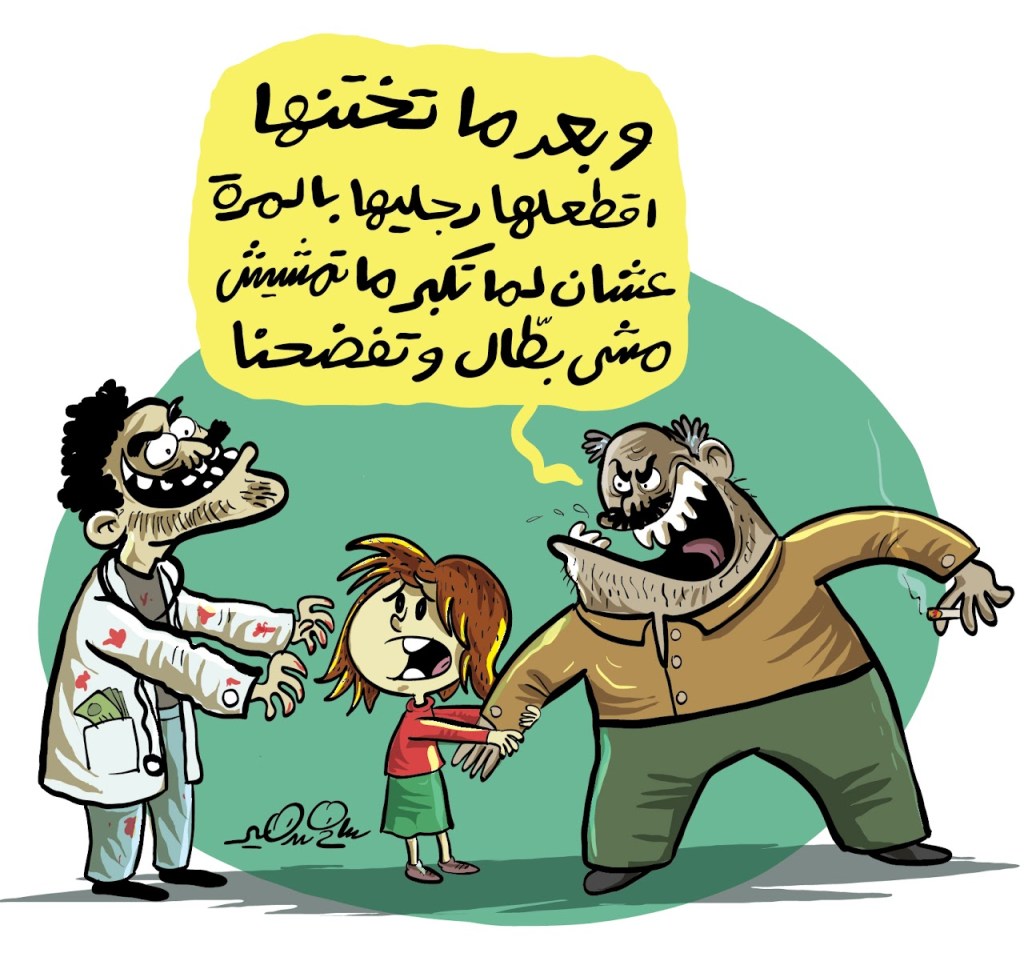
One particularly shocking cartoon reveals the flawed logic behind FGM as a misguided form of protection. It portrays a father instructing a doctor to mutilate a girl, even suggesting extreme violence, under the false belief that such acts prevent immorality. This harsh depiction exposes the dangerous myths that fuel the practice and calls for critical examination of cultural norms that endanger girls rather than protect them.
Symbolism and Awareness
Symbolism plays a crucial role in these cartoons, contrasting innocence with threat. For example, one image juxtaposes a young girl surrounded by delicate flowers with looming scissors, emphasizing the vulnerability of girls and the urgent need for protection and education. Such powerful visual contrasts serve to engage viewers emotionally and intellectually, fostering empathy and a call to action.
The Role of Visual Editorials in Social Change
Editorial cartoons have long been a compelling medium for social commentary, using satire, symbolism, and stark imagery to communicate complex issues succinctly. Sameh Samir’s work on FGM exemplifies how art can illuminate painful truths and mobilize public opinion. By curating these cartoons, this page contributes to the ongoing dialogue about criminalizing FGM and protecting girls’ rights, encouraging readers to reflect and advocate for change.
Context and Cultural Sensitivity
Addressing FGM requires a responsible and sensitive approach, acknowledging the cultural contexts while firmly opposing the practice’s harm. These cartoons navigate this balance by focusing on the human cost and legal imperatives without resorting to graphic depictions. They respect the dignity of affected communities while challenging harmful traditions, fostering constructive conversations toward eradication.
What to Look For
As you explore this curated selection, notice the recurring themes of violence, generational impact, and legal intervention. Observe how the artist uses metaphor and symbolism to communicate the urgency of ending FGM. Consider the emotional responses these images evoke and how they might inspire advocacy and education efforts in your community.
Published by Rose El-Youssef, Sabah El-Kheir, Al-Masry Al-Youm, and featured on international platforms.
FGM Criminalization
Click any cartoon to open a large CSS-only preview. This WordPress version uses only HTML and CSS, so the text and images remain readable for SEO.

Powerful Cartoon Highlighting the Brutality of FGM in Egypt
This political cartoon uses the metaphor of a butcher shop to highlight the violent and brutal nature of female genital mutilation (FGM), a significant social and health issue in Egypt. It aims to raise awareness and provoke discussion about the harmful implications of this practice within the community.

Shocking Cartoon on Brutal Female Genital Mutilation and Misguided Protection
This cartoon reveals the harsh truth behind female genital mutilation, depicting a father sending his son to a blood-stained doctor with cruel instructions to mutilate a girl and even cut off her legs. It challenges the misguided belief that such violence protects girls from falling into immorality, exposing the brutality and flawed logic behind this harmful practice in society.
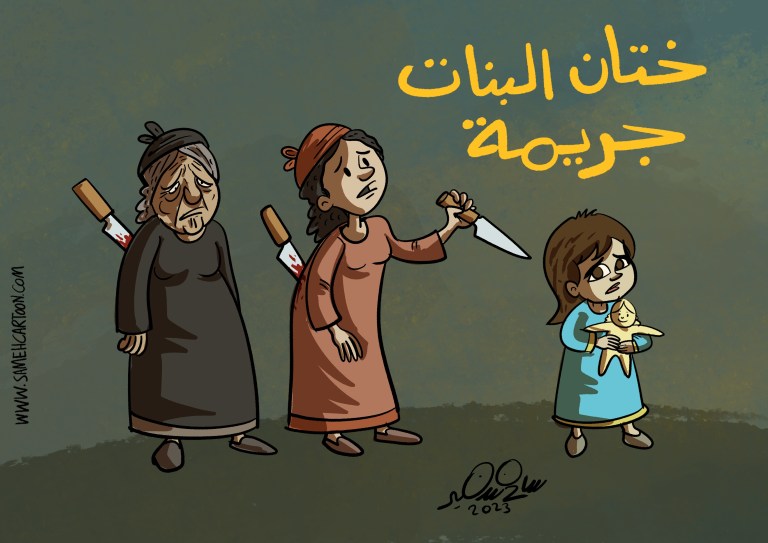
The Perpetual Cycle of Female Genital Mutilation
The cartoon vividly depicts the cycle of female genital mutilation, with a grandmother, mother, and daughter caught in a chain of harm. By showing how this practice is passed down through generations, the artwork calls for increased awareness and action to end FGM. Sameh Samir addresses the urgent need for societal change to protect girls from this crime.
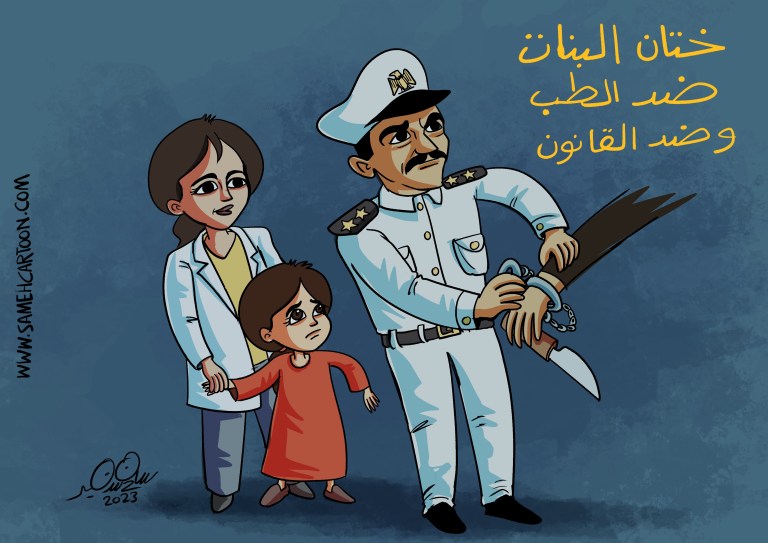
Cartoon Raising Awareness Against Female Circumcision Laws and Health Risks
This cartoon uses clear imagery and text to emphasize that female circumcision is both medically harmful and illegal. The presence of a police officer and a doctor underscores the legal and health perspectives. The artwork aims to raise public awareness and encourage the protection of girls' rights. Sameh Samir presents this message to support community education.
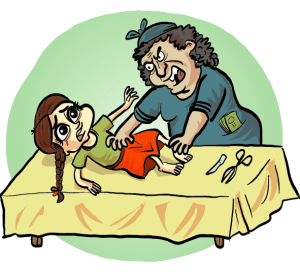
Cartoon Highlighting the Brutality of Female Genital Mutilation
The cartoon highlights the violent and cruel nature of female genital mutilation, aiming to raise awareness about this harmful practice. It serves as a social commentary on the urgent need to protect girls and women from such brutality.
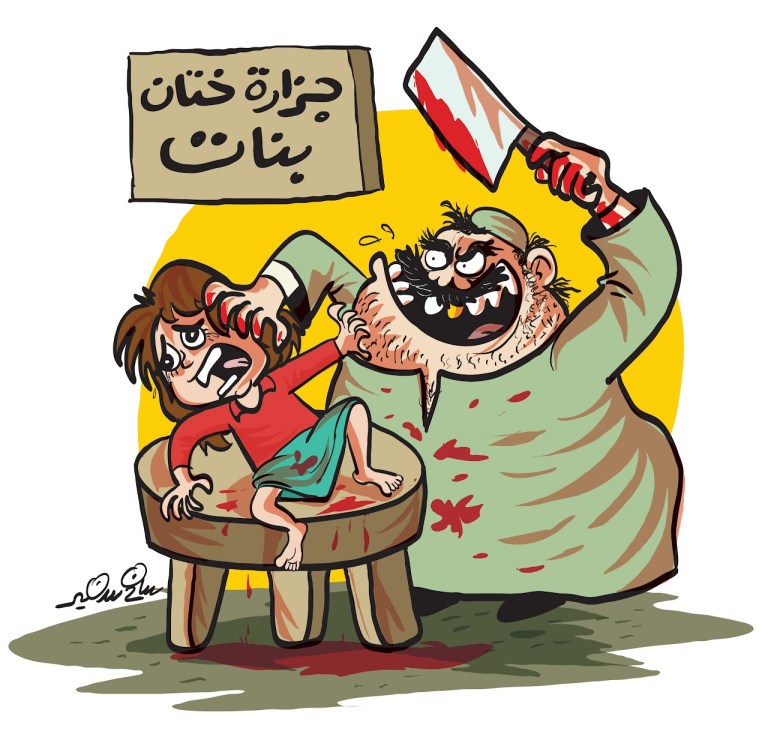
Satirical Cartoon on Female Circumcision as a Slaughterhouse
This cartoon by uses dark satire to raise awareness about the practice of female circumcision in Egypt. It depicts the issue as a gruesome slaughterhouse, emphasizing the brutality behind the tradition. The artwork combines humor with a serious social message to provoke thought and discussion.
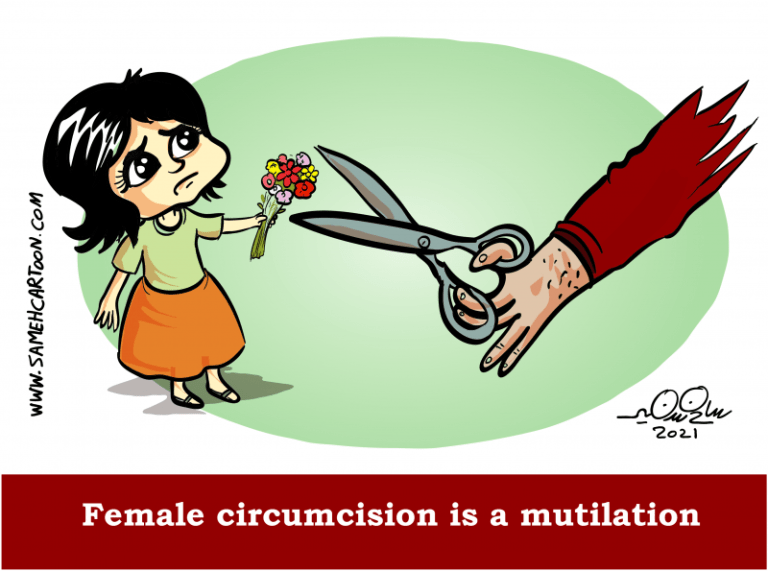
Cartoon Raising Awareness Against Female Circumcision
This cartoon uses strong symbolism to raise awareness about the dangers of female circumcision. The image contrasts a young girl's innocence, represented by flowers, with the threat of scissors, emphasizing the need for protection and education. The artwork is to support awareness efforts.
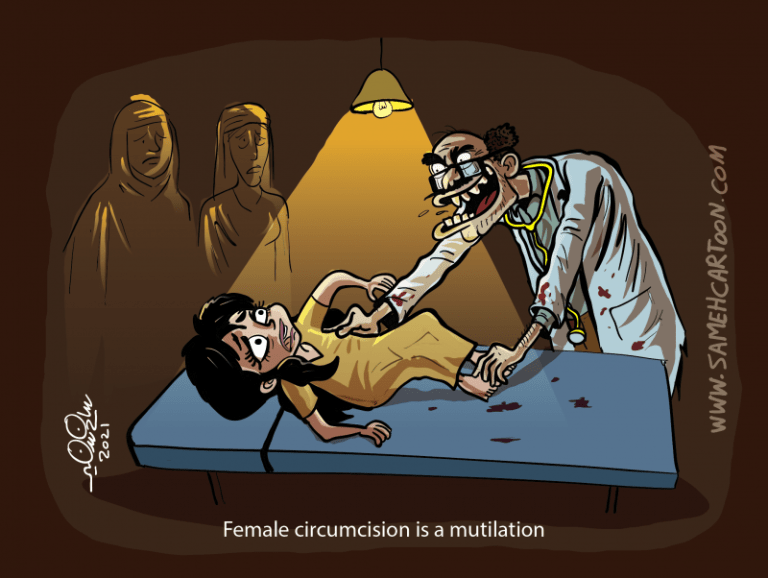
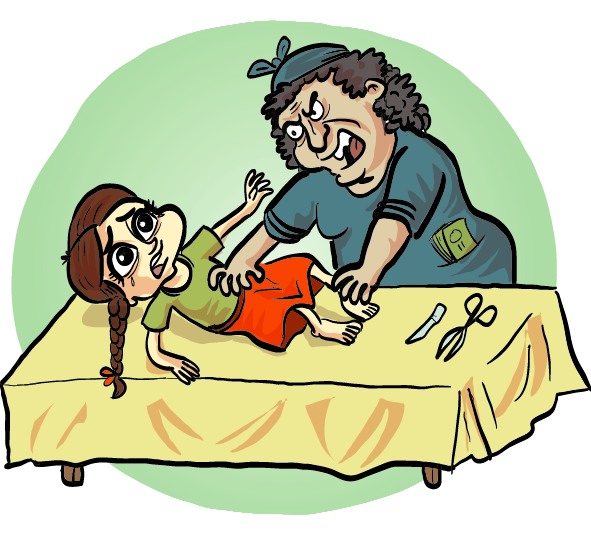
Cartoon Exposing the Harmful Reality of Female Circumcision
This cartoon powerfully depicts the reality of female circumcision, emphasizing its nature as a form of mutilation. The artwork aims to raise awareness and spark conversation about this ongoing issue in Egypt. By illustrating the fear and harm involved, it encourages communities to reconsider this harmful practice. Sameh Cartoon uses visual storytelling to address an important social concern.
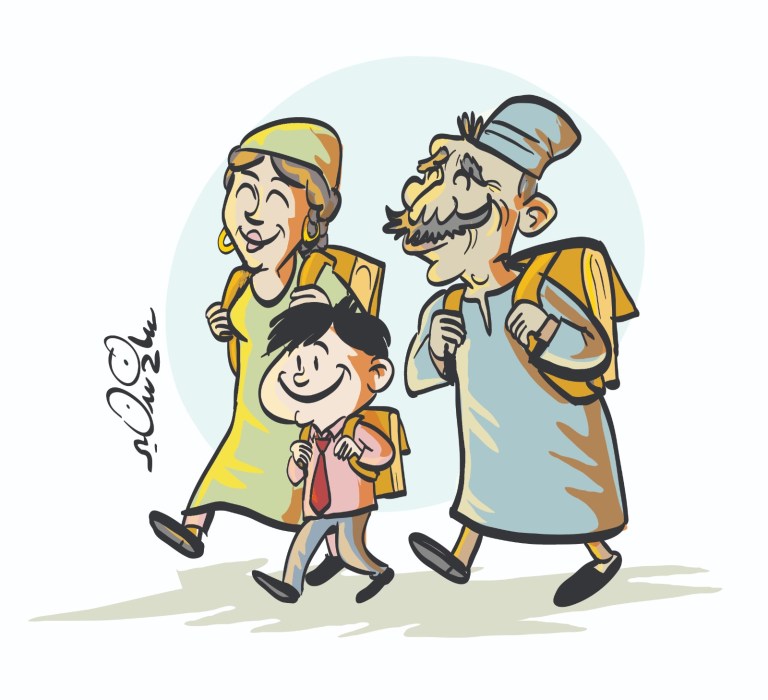
Education for All Ages: Family Walking to School and Literacy Classes
This cartoon by Sameh Samir highlights the vital role of education and adult literacy for all ages. It depicts a simple multi-generational family walking the same path, with children heading to school and adults attending literacy classes, symbolizing lifelong learning and the fight against illiteracy.

Child Stabbed Tells Father About Knife and Cocaine Theft
This cartoon depicts a child telling his father that Hamada Ghazni stabbed him and stole cocaine to use alone, illustrating the harsh reality of childhood violence and drug abuse. It contrasts the usual innocent childhood complaints with serious issues like knives and drugs, exposing the breakdown of values that create young thugs.
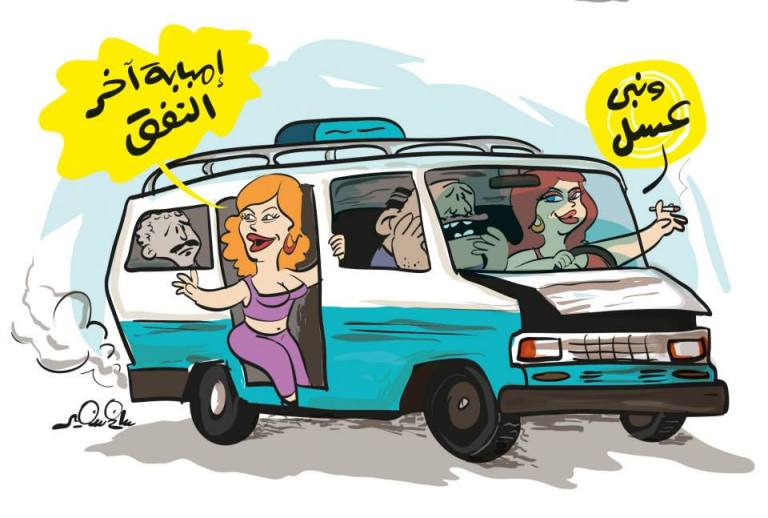
Parallel World Cartoon: Women Driving and Harassing Men in Microbus
This cartoon depicts a parallel universe where the social roles are reversed: women drive microbuses and harass men, while men appear tense and uneasy. It offers a satirical look at gender dynamics by imagining a female-led society in everyday public transport scenarios.

Cartoon of Host Blaming Child Thieves as Victims of Society
This cartoon illustrates a TV host who blames child thieves, ignoring that they are victims of difficult social circumstances. The host sarcastically questions why they did not commit suicide, reflecting a harsh societal attitude towards vulnerable children. The image raises awareness about the need to understand and support children affected by social issues.
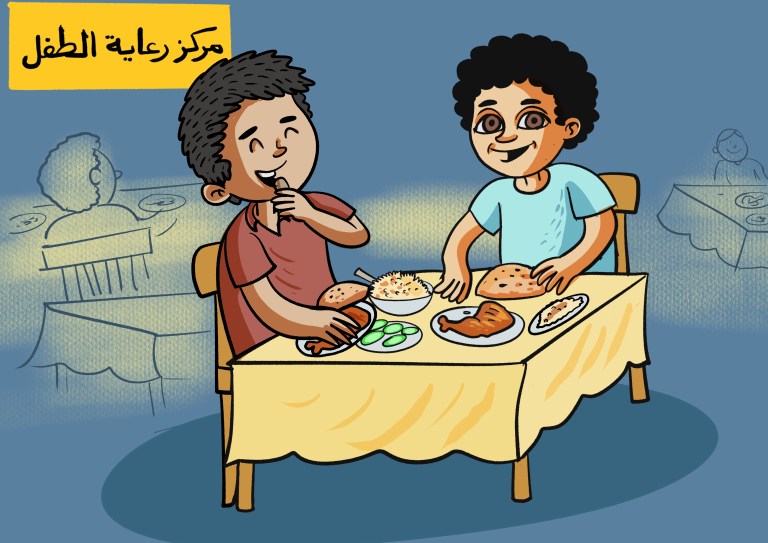
Cartoon Depicting Child Labor and the Importance of Child Care Centers
This awareness cartoon, created for the Egyptian Ministry of Social Solidarity, illustrates the dangers of child labor and reckless driving. It tells the true story of a boy delivering goods who is injured in an accident, receives vital support from a child care center, and dreams of becoming an army officer. Sameh Cartoon uses this artwork to promote child protection and the importance of community care.
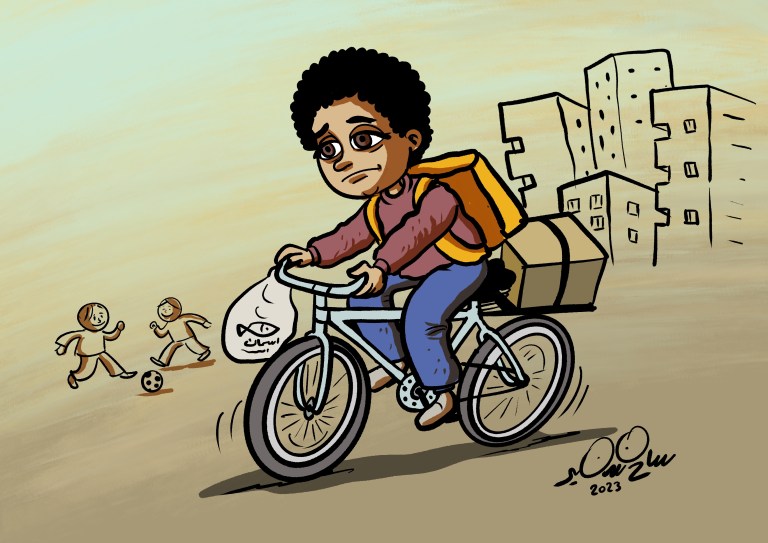
Child Labor Awareness: Real Story of a Young Fish Delivery Worker
This Sameh Cartoon artwork, created for the Egyptian Ministry of Social Solidarity, is based on a true story of a child laborer delivering fish who was injured in a traffic accident. The image raises awareness about the risks of child labor, the importance of road safety, and the positive impact of child care services.
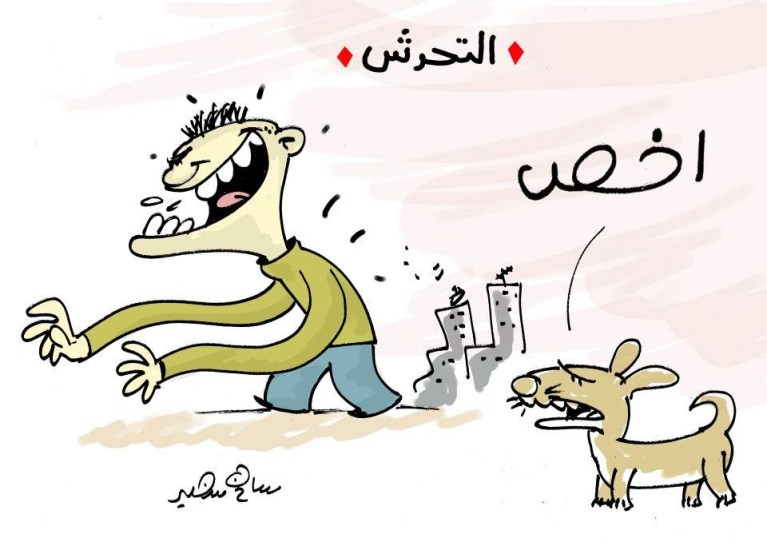
Cartoon of Dog Rejecting Harassment Highlights Egyptian Social Issue
This Sameh Cartoon depicts a dog rejecting harassment as it sees a man with a long hand trying to touch a woman. The cartoon cleverly uses the Egyptian insult 'dog'—often used for harassers—to show the dog itself disavowing such vile acts. It highlights the social issue of harassment in Egypt with sharp irony and awareness.
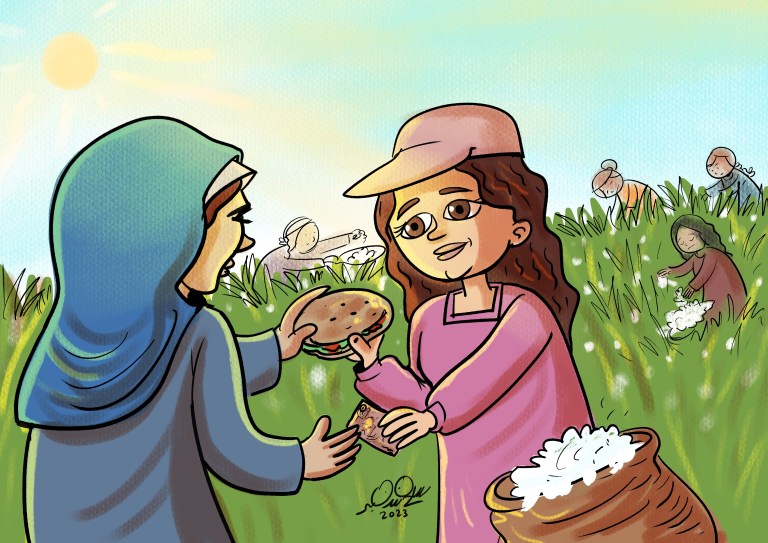
Child Labor Awareness: Young Girl Working in Cotton Fields
This brings attention to the issue of child labor in Egypt, showing a young girl working in cotton fields for minimal wages and under harsh supervision. The artwork aims to raise awareness about the need to protect children and support their dreams.

Cartoon of a Child Cotton Worker Dreaming of Becoming a Doctor
This Sameh Cartoon illustration, created for the Egyptian Ministry of Social Solidarity, highlights the harsh reality of child labor in cotton fields. The image shows a young girl enduring long hours and mistreatment, yet holding onto her dream of becoming a doctor. It aims to raise awareness about the need to protect children's rights and end child labor.
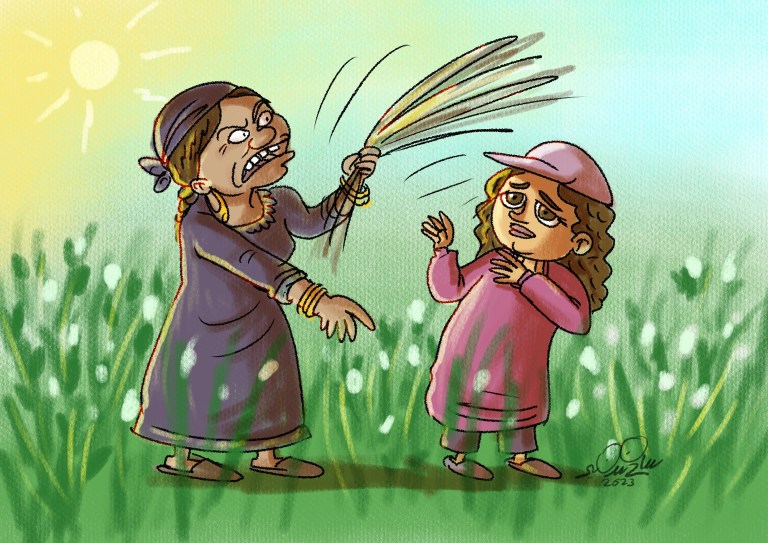
Cartoon Highlighting Child Labor in Cotton Fields
This impactful raises awareness about child labor in Egypt, portraying a real-life story of a girl working in cotton fields for little pay and under harsh supervision. The artwork aims to highlight the importance of protecting children's rights and supporting their dreams.
Explore more editorial cartoon collections by Sameh Samir
Artwork and editorial cartoons by Sameh Samir. All rights reserved.