Sameh Cartoon · Editorial Cartoons
Playful Cartoon Spotlight on Gender Roles and Male Entitlement
This curated selection of editorial cartoons cleverly unpacks the tangled web of gender roles and male entitlement, exposing the absurdities and contradictions that often go unnoticed. Through sharp wit and incisive imagery, these cartoons challenge outdated norms and invite viewers to reconsider the power dynamics that shape everyday interactions, all while balancing humor with a critical eye on societal expectations.


A curated visual editorial page about "Gender roles and male entitlement in cartoons", supported by 18 relevant cartoons by Sameh Samir.
Editorial Note: Visual Satire on Gender Roles and Entitlement
In this carefully curated collection, Sameh Samir employs the striking device of baby faces merged with adult features to humorously dissect the complex social fabric of gender roles and male entitlement. The cartoons use satire and irony to expose how entitlement is often nurtured from infancy, reflecting broader societal attitudes without resorting to harsh criticism. This approach invites viewers to engage with the topic through a lens of humor and reflection, highlighting the subtle ways gender privilege manifests in everyday life.
The Power of Visual Juxtaposition: Babies with Adult Faces
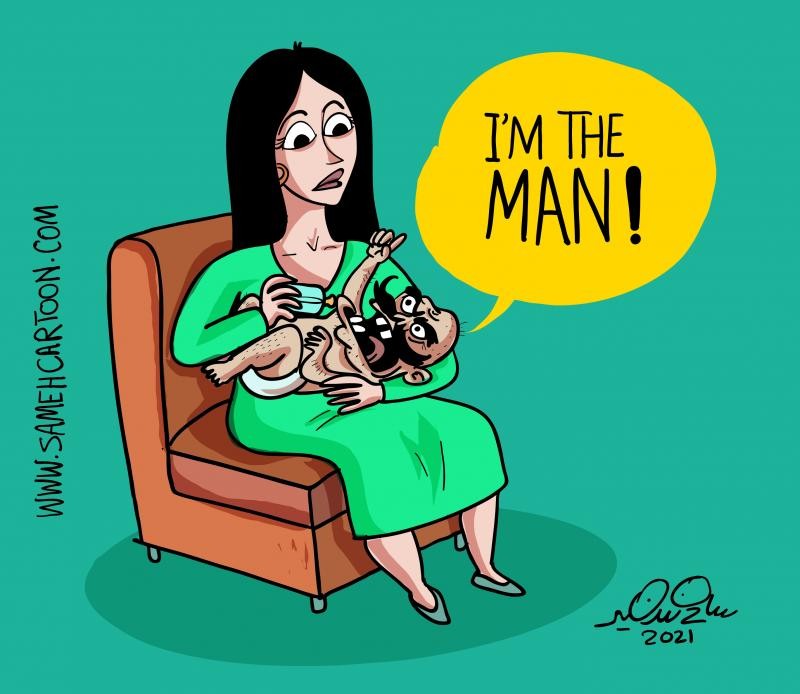
One of the most compelling techniques in these cartoons is the use of babies sporting adult facial features, such as mustaches or stern expressions, to symbolize the premature imposition of gendered expectations. For example, a baby confidently declaring “I am the man!” while breastfeeding humorously captures the paradox of male entitlement being ingrained even before maturity. This visual contrast not only elicits laughter but also underscores how societal conditioning begins early, shaping identities and power dynamics.
Social Satire Rooted in Upbringing and Privilege
Several cartoons in this selection highlight how boys are often raised with an implicit message of superiority. By exaggerating adult attitudes in infant characters, the illustrations critique the socialization process that privileges masculinity. The humor lies in the absurdity of a baby asserting dominance, which mirrors real-life scenarios where entitlement is normalized. This subtle satire encourages viewers to reconsider the foundations of gender bias without direct accusation.
Symbolism and Messaging Without Direct Confrontation
Rather than delivering overt critiques, these cartoons use symbolism to communicate their message. The baby with a mustache or the tongue speaking masculine discourse visually represent entrenched gender norms. This indirect approach fosters awareness by allowing audiences to interpret the imagery and reflect on the societal structures that perpetuate male entitlement. The cartoons thus serve as a mirror, inviting self-examination and dialogue.
Humor as a Bridge to Social Awareness
Humor plays a pivotal role in making sensitive topics accessible. By employing playful exaggeration and irony, Sameh Samir’s cartoons soften the impact of serious social commentary. This technique helps dismantle defensive reactions and opens space for conversations about gender roles and equality. The baby-adult face humor, in particular, creates a memorable visual metaphor that lingers in the viewer’s mind, reinforcing the message through laughter.
Contextualizing Gender Dynamics in Egyptian Society
While the themes are universal, some cartoons subtly reflect Egyptian social contexts, such as evolving family roles and gender expectations. For instance, scenes inspired by classic Egyptian cinema or family dynamics add layers of cultural relevance. This localized perspective enriches the satire by connecting it to real societal shifts, illustrating how traditional gender roles are both challenged and reinforced in contemporary settings.
These cartoons have been featured across prominent platforms including Rose El-Youssef, Sabah El-Kheir, Al-Masry Al-Youm, and various international outlets, underscoring their broad resonance. This page offers a curated glimpse into Sameh Samir’s visual commentary, inviting readers to explore the intersection of humor, art, and social critique through the lens of gender roles and male entitlement.
Gender roles and male entitlement in cartoons
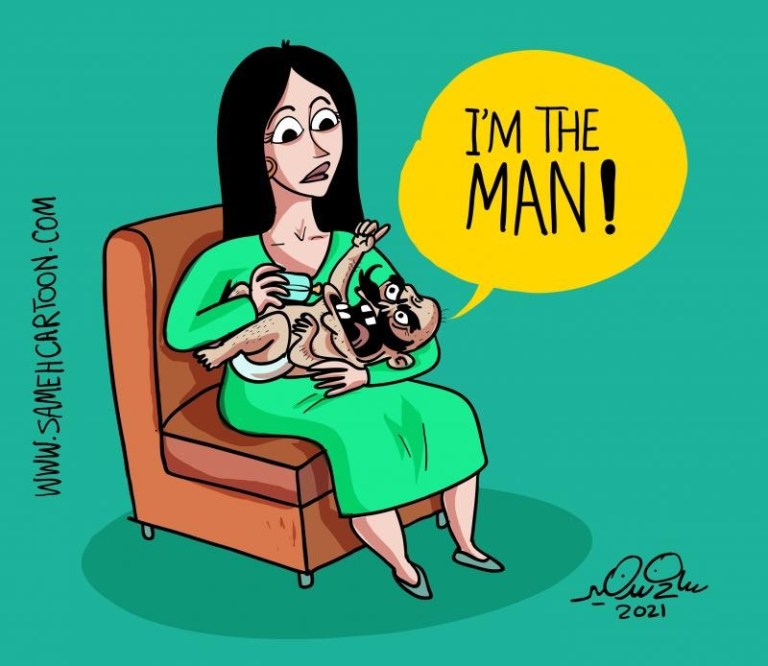
Cartoon Satire: Baby with Mustache Asserts Male Entitlement
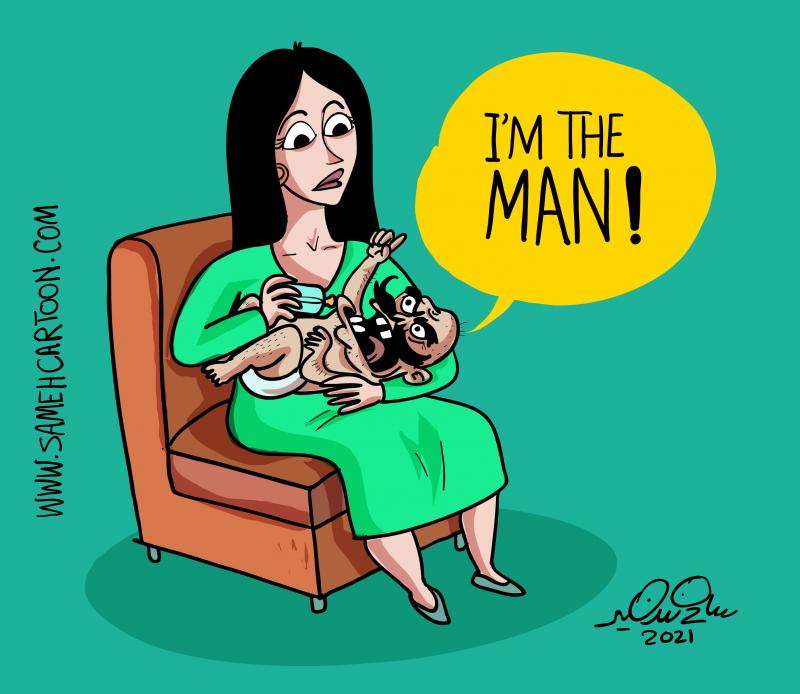
This Sameh Samir cartoon uses playful satire to highlight gender entitlement, depicting a baby with adult features and a mustache asserting dominance while breastfeeding. The scene humorously comments on ingrained gender roles in society.
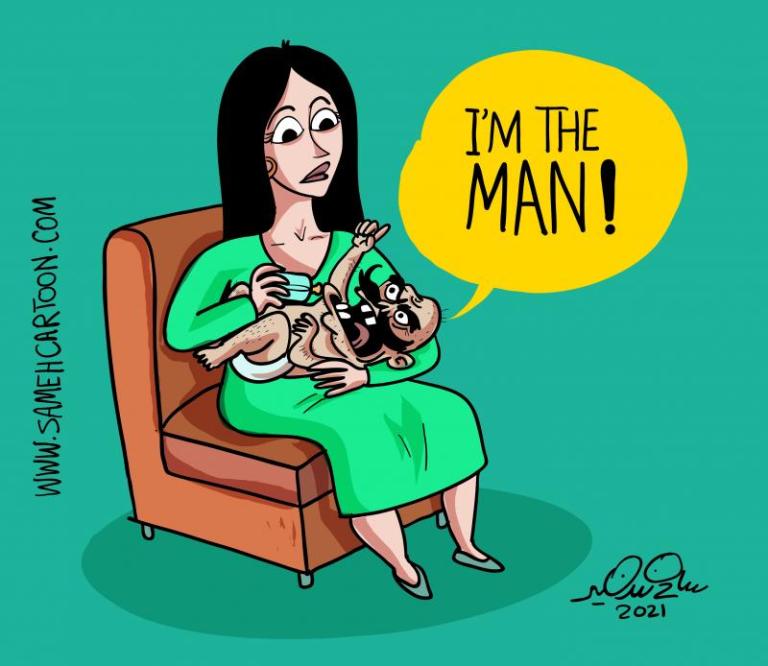
Cartoon Highlighting Male Entitlement and Gendered Upbringing
This humorously exposes how boys are often raised to believe their value is higher simply because they are male. The exaggerated adult face on the baby and the bold statement 'I'm the man!' shed light on the roots of male entitlement and the impact of gendered upbringing in society. Created by Sameh Samir.
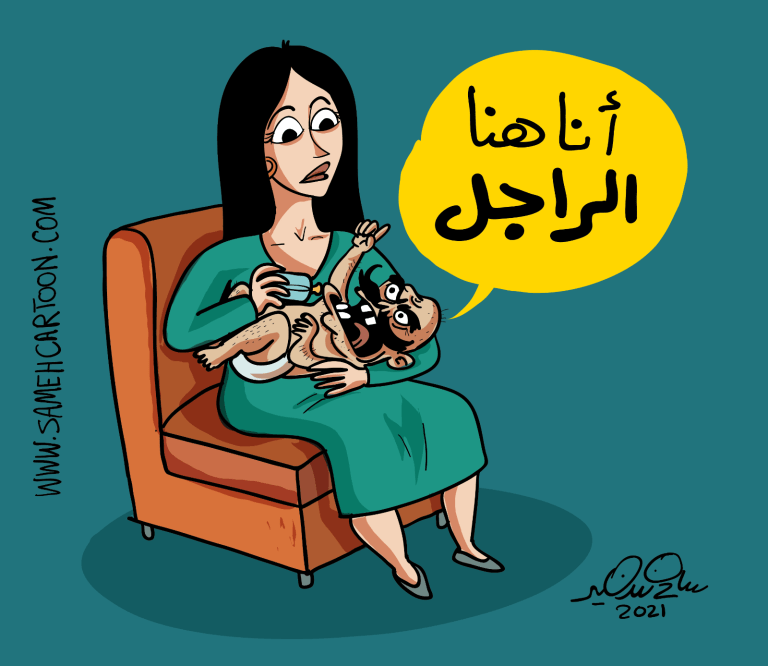
Cartoon Highlighting Gender Privilege with a Dominant Baby
This uses humor to spotlight gender privilege, featuring a baby with adult features and a mustache declaring 'I am the man' during breastfeeding. The scene satirizes deep-rooted gender roles and the early entitlement often passed down to boys in society. Created by Sameh Samir.

Cartoon Depicting Male-Dominated Society Through a Speaking Tongue
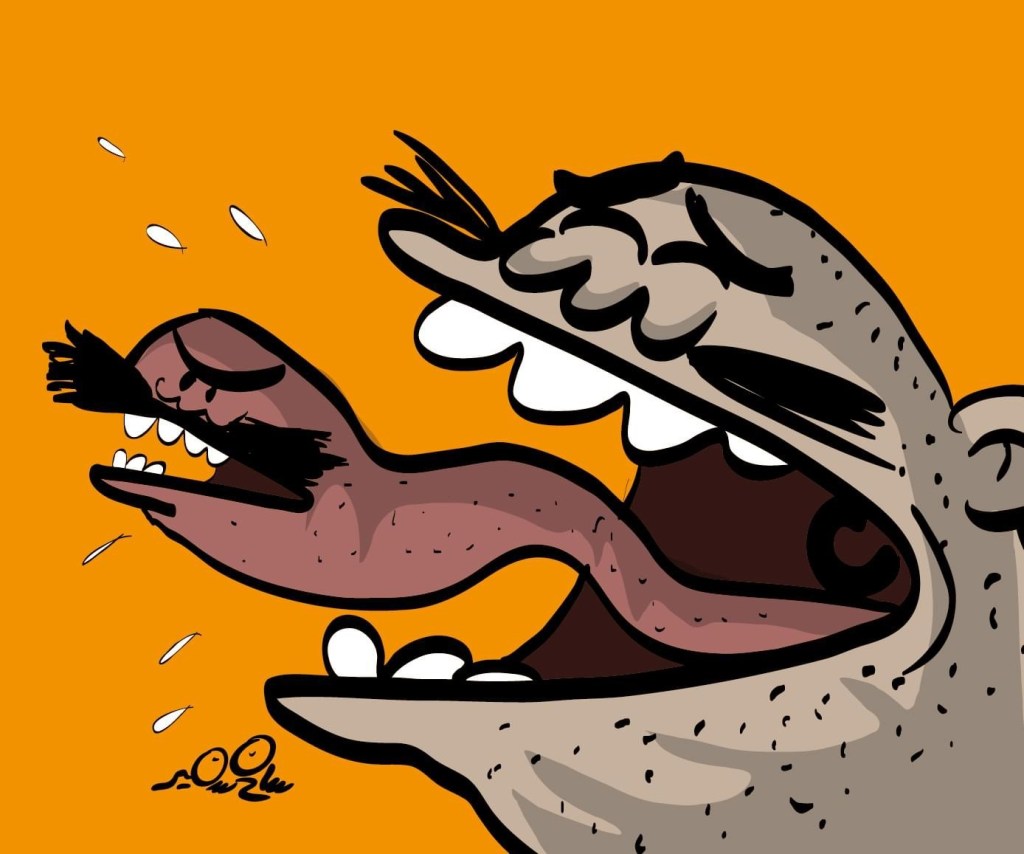
This cartoon by Sameh Samir depicts a tongue speaking in a masculine discourse, symbolizing how deeply male-dominated ideas permeate society. The illustration critiques societal norms by visually representing the dominance of masculine perspectives in everyday communication.
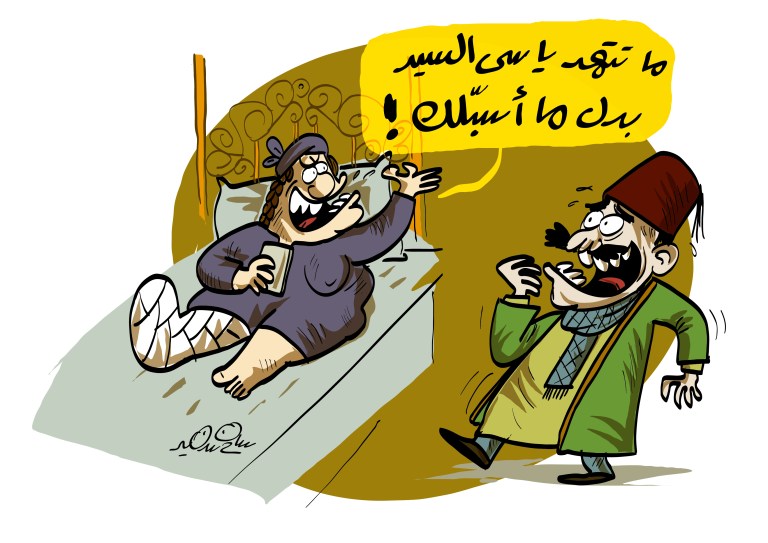
Modern Take on 'Between Two Palaces' Highlights Changing Gender Dynamics
This cartoon by Sameh Samir offers a contemporary perspective on the classic film 'Between Two Palaces,' showing a wife who challenges her husband's traditional dominance after she breaks her leg. The wife warns him not to threaten her, reflecting evolving gender roles in Egyptian society with a comedic tone.

Contemporary Cartoon on Gender Dynamics Inspired by 'Between Two Palaces'
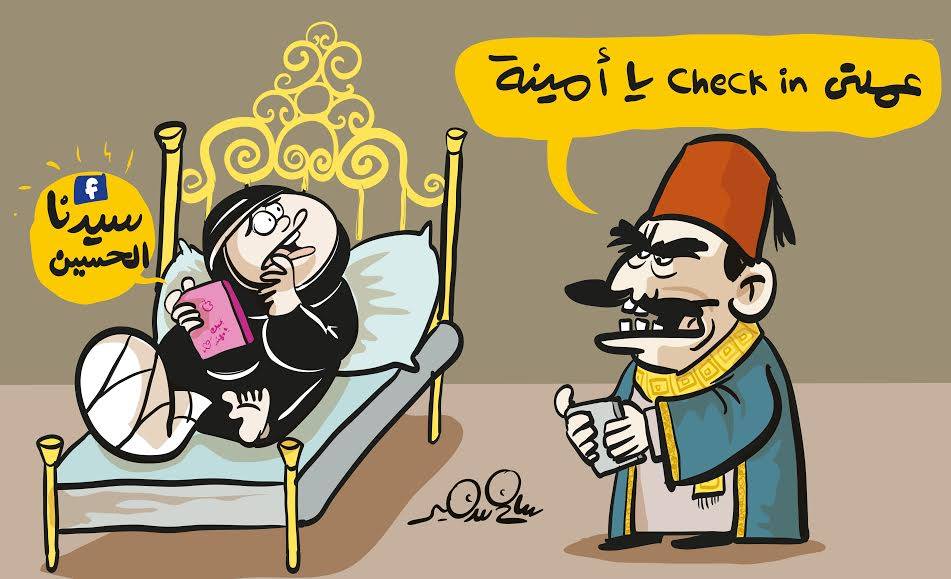
This cartoon by Sameh Samir offers a contemporary take on a famous scene from the film 'Between Two Palaces' by Naguib Mahfouz. It contrasts the traditionally authoritarian husband with his wife who now checks in online, humorously illustrating evolving gender roles in Egyptian society.
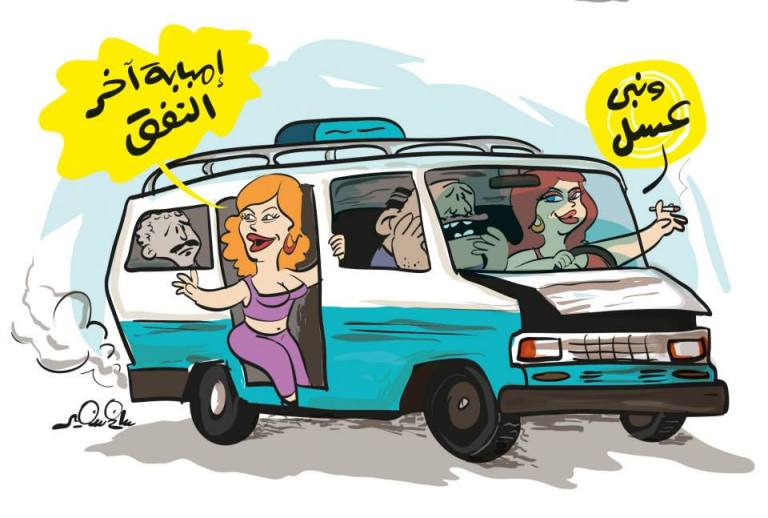
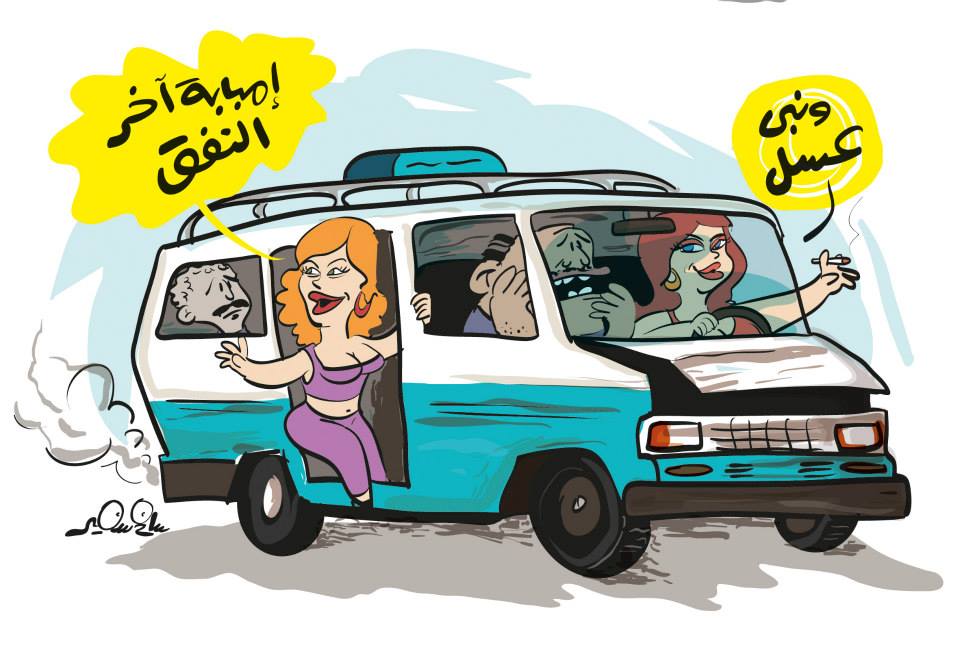
Parallel World Cartoon: Women Driving and Harassing Men in Microbus
This cartoon depicts a parallel universe where the social roles are reversed: women drive microbuses and harass men, while men appear tense and uneasy. It offers a satirical look at gender dynamics by imagining a female-led society in everyday public transport scenarios.
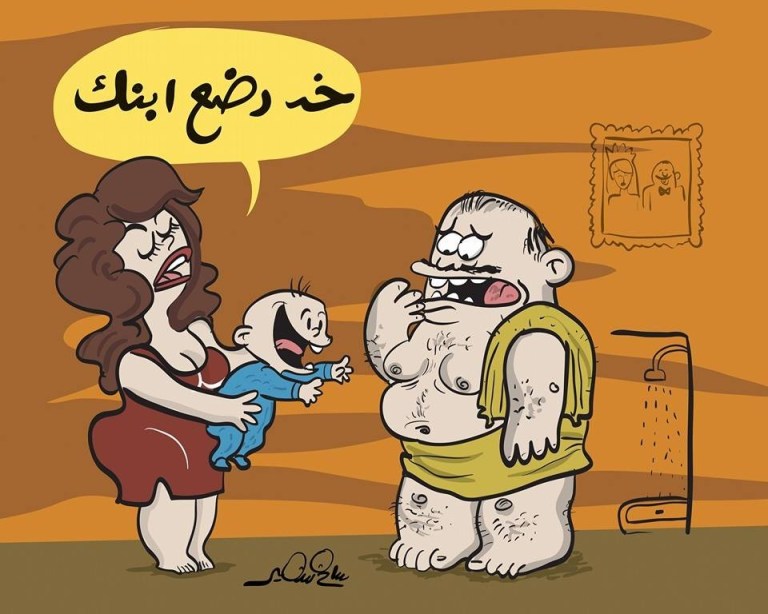
Wife Jokes About Husband’s Gynecomastia While Baby Watches
This cartoon humorously addresses gender equality and marital duties as a wife tells her husband, who has noticeable gynecomastia, to breastfeed their baby. The baby’s eager gaze at the father’s chest adds a playful twist to the conversation about shared parental responsibilities in an Egyptian family context.
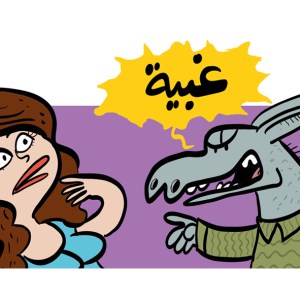
Angry Man with Donkey Head Insults Woman Highlighting Gender Bias
This cartoon illustrates a man with a donkey head angrily insulting a woman by calling her stupid, highlighting issues of masculinity and gender bias. The image critiques the persistence of sexist attitudes and the demeaning language used against women in society.
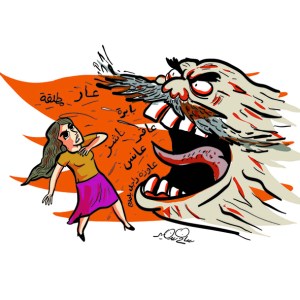
Cartoon of Woman Facing Giant Angry Face Symbolizing Societal Pressure
This cartoon illustrates a woman confronted by a giant angry face symbolizing societal pressures in Egypt. The scene uses humor to reflect on the challenges individuals face when asserting their rights within community expectations.

Cartoon Critiquing Victim-Blaming and Misconceptions About Freedom in Harassment
This addresses the issue of victim-blaming and the widespread misconception that personal freedom justifies harassment. The artwork depicts a man using flawed logic to excuse his actions, while onlookers agree and a woman is blamed, reflecting troubling social attitudes that need to be challenged.
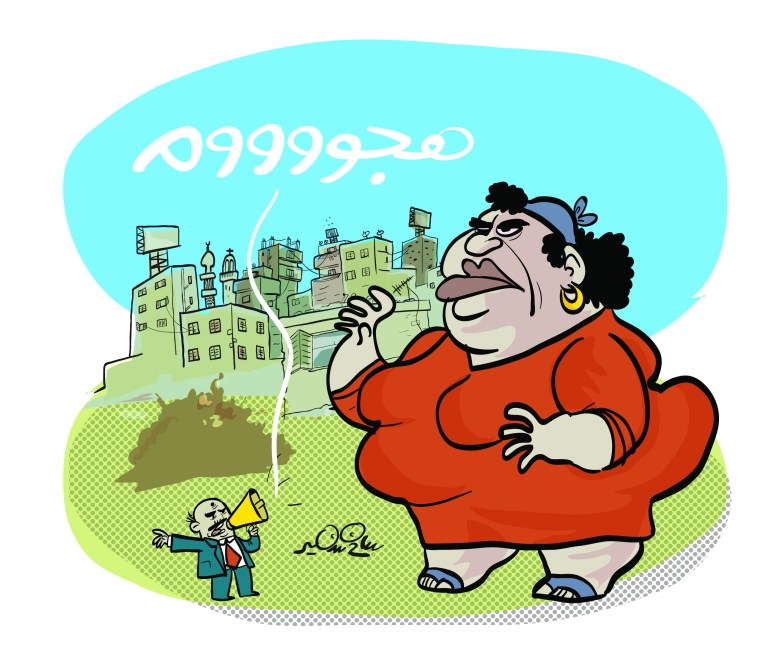
Cartoon Critiquing the Use of Female Enforcers Against Women's Protests
This Sameh Cartoon sharply critiques the practice of deploying women known for street confrontations to disrupt women's demonstrations, exposing how they are portrayed as simple citizens while following orchestrated commands.

Humorous Cartoon on Family Divorce and Child in Egyptian Context
This cartoon by Sameh Cartoon humorously captures a common family dynamic in Egyptian culture, where a man announces his divorce to his mother while his child clings to him. The scene uses light-hearted humor to reflect on family relationships and social situations.

Cartoon on Women's Rights Humor in Egyptian Context
This cartoon by humorously depicts a man's exaggerated confusion about women's rights in Egypt. It reflects ongoing social discussions about gender equality with a comedic tone.
Cartoon Critiquing Victim-Blaming and Misconceptions About Freedom in Harassment
This addresses the issue of victim-blaming and the widespread misconception that personal freedom justifies harassment. The artwork depicts a man using flawed logic to excuse his actions, while onlookers agree and a woman is blamed, reflecting troubling social attitudes that need to be challenged.
Cartoon Critiquing Victim-Blaming and Misconceptions About Freedom in Harassment
This addresses the issue of victim-blaming and the widespread misconception that personal freedom justifies harassment. The artwork depicts a man using flawed logic to excuse his actions, while onlookers agree and a woman is blamed, reflecting troubling social attitudes that need to be challenged.
Cartoon Critiquing Victim-Blaming and Misconceptions About Freedom in Harassment
This addresses the issue of victim-blaming and the widespread misconception that personal freedom justifies harassment. The artwork depicts a man using flawed logic to excuse his actions, while onlookers agree and a woman is blamed, reflecting troubling social attitudes that need to be challenged.

Cartoon Depicting Irony in Social Commentary and Public Perception
This cartoon humorously illustrates the irony of social commentary, with a man accusing everyone of being disappointing and misled while he is visibly controlled by a chain. The image reflects on how individuals may criticize society without recognizing their own constraints. , the cartoon uses satire to comment on public perception and self-awareness.
Related cartoon pages and context
This selection connects to wider editorial cartoon collections, workshop/event pages, and Sameh Samir’s professional profiles.
Latest Cartoons & Visual Stories
Browse recent cartoon posts and curated visual stories.
About Sameh Samir
Read more about the cartoonist behind the work.
Awareness Cartoons
Cartoons for social impact, education and public awareness.
Political Cartoons
Editorial satire and visual commentary on power and public life.
Community Cartoons
Social behavior, public life and everyday visual satire.
Humor Cartoons
Humor, irony and everyday contradictions in cartoon form.
Sameh Cartoon on Cartoon Movement
International cartoon platform profile.
Artwork and editorial cartoons by Sameh Samir. All rights reserved.