Sameh Cartoon · Editorial Cartoons
How Humor Cartoons Tell Full Jokes Visually
In the world of humor cartoons, a single image often carries the weight of an entire joke, blending wit and insight with a stroke of the pen. This curated selection of editorial cartoons showcases how clever visuals can deliver sharp commentary and laughter simultaneously, proving that sometimes, less truly is more when it comes to storytelling. Each cartoon invites you to pause, reflect, and chuckle at the art of saying everything without uttering a word.


A curated visual editorial page about "Humor cartoons: how one image can tell a full joke", supported by 18 relevant cartoons by Sameh Samir.
Editorial Note: The Art of Humor Cartoons
Humor cartoons are a fascinating form of storytelling that distills complex ideas into a single, often hilarious, visual moment. Unlike lengthy narratives, these cartoons rely on the immediate impact of a visual joke — a combination of character design, setting, and the punchline expressed through body language or dialogue. This editorial page presents a curated selection of humor cartoons from renowned publications such as Rose El-Youssef, Sabah El-Kheir, Al-Masry Al-Youm, and various international platforms, highlighting how one image can tell a complete joke.
What to Look For in a Visual Joke
At the heart of every successful humor cartoon lies a well-crafted visual joke. This involves several key elements:
- Character: The personality and expression of the characters set the tone. Whether it’s a nervous man forced to laugh at a TV or a traditional Egyptian street vendor, the characters carry the emotional weight of the joke.
- Situation: The context or setting provides the backdrop. For example, a parliament building leaking sewage cleverly symbolizes political corruption, while a man admiring a virus character humorously reflects social attitudes during health crises.
- Reaction: The punchline often emerges from the characters’ reactions — a sheep ironically commenting on harassment or a microbus driver’s surprised face at verbal irony. These reactions complete the joke visually and emotionally.
Context: Humor Cartoons as Social Commentary
Many humor cartoons go beyond mere amusement; they serve as sharp social commentary. For instance, the cartoon titled Double Meaning: Parliamentary Candidates and Leaks uses satire to highlight public disillusionment with political representatives by depicting the parliament building atop a leaking sewage pipe. Similarly, Forced Laughter: Media, Comedy, and Authority exposes the tension between genuine emotion and forced entertainment under authoritarian pressure.
These cartoons engage audiences by blending humor with critical insights, making complex societal issues more accessible and thought-provoking through visual storytelling.
Building Humor Through Visual Storytelling
Visual storytelling in humor cartoons is an intricate process. The artist must balance simplicity and detail to ensure the joke is instantly understood. For example, the cartoon Funny Cartoon: Online Shopping Mimics Watermelon Vendor Calls cleverly merges traditional street vendor calls with modern e-commerce ads, using familiar cultural cues to create a playful social commentary.
Similarly, the Funny Egyptian Cartoon on Verbal Irony in Microbus Fare Collection captures a linguistic paradox that resonates deeply with Egyptian audiences, relying on the visual cue of the driver’s expression to deliver the punchline.
The Role of Character and Expression
Characters in humor cartoons are often exaggerated or stylized to enhance comedic effect. Expressions—whether it’s forced laughter, surprise, admiration, or irony—are crucial to conveying the joke’s emotional core. The Humorous Cartoon of Man Admiring Virus Character in Egyptian Style uses a lighthearted expression to reflect societal attitudes toward viruses, blending humor with cultural context.
In another example, the Famous Scene from Egyptian Comedy Film Ibn Hamido with Modern Twist uses familiar characters from classic cinema, updated with contemporary humor, demonstrating how character recognition amplifies the joke’s impact.
Why Humor Cartoons Matter
Humor cartoons are more than just funny pictures; they are a powerful medium for storytelling, critique, and cultural reflection. By distilling complex ideas into a single image, they invite viewers to engage, reflect, and laugh simultaneously. This curated page from our cartoon library celebrates the artistry behind humor cartoons and their ability to tell a full joke with clarity, wit, and style.
Published by Rose El-Youssef, Sabah El-Kheir, Al-Masry Al-Youm, and international platforms.
Humor cartoons: how one image can tell a full joke

Double Meaning: Parliamentary Candidates and Leaks
This uses sharp satire to comment on parliamentary misconduct. By illustrating the parliament building atop a leaking sewage pipe, it plays on the dual meaning of 'candidate'—as both an elected official and a leak—suggesting that the real source of the problem is the MPs themselves, not the infrastructure. The citizens' remarks highlight public disillusionment with political representatives.
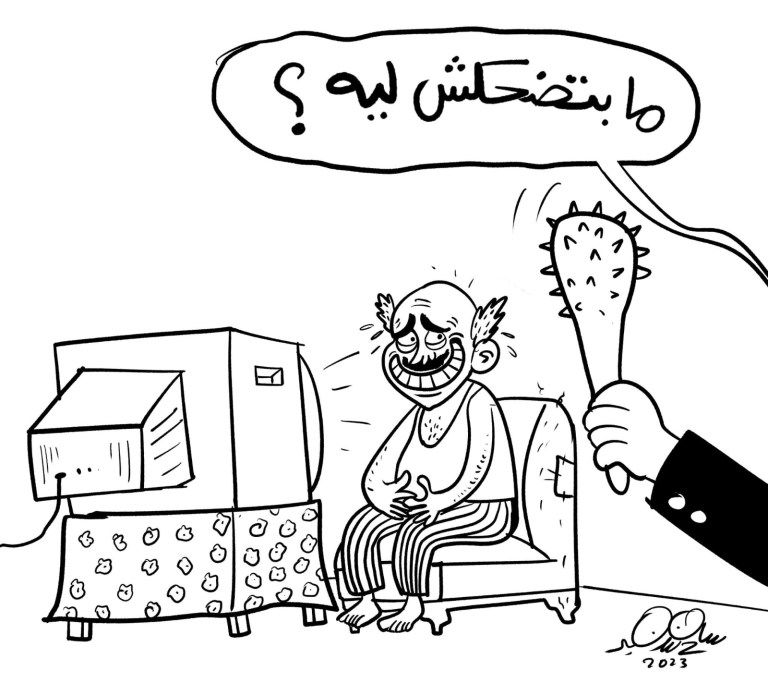
Forced Laughter: Media, Comedy, and Authority
In this , a man is shown nervously laughing at a TV while another person threatens him with a spiked club, demanding, 'Why aren't you laughing?' The artwork humorously exposes the use of state-directed media and comedy to distract from economic issues, emphasizing the tension between genuine emotion and forced entertainment.

Funny Cartoon: Online Shopping Mimics Watermelon Vendor Calls
This cartoon captures the amusing contrast where a simple woman buys watermelon from a street vendor who shouts the famous call 'أحمر على أبوووه يا بطيخ', reflecting how online shopping ads have influenced everyday life in Egypt. Sameh Cartoon cleverly blends traditional street vendor calls with modern e-commerce culture in this playful social commentary.
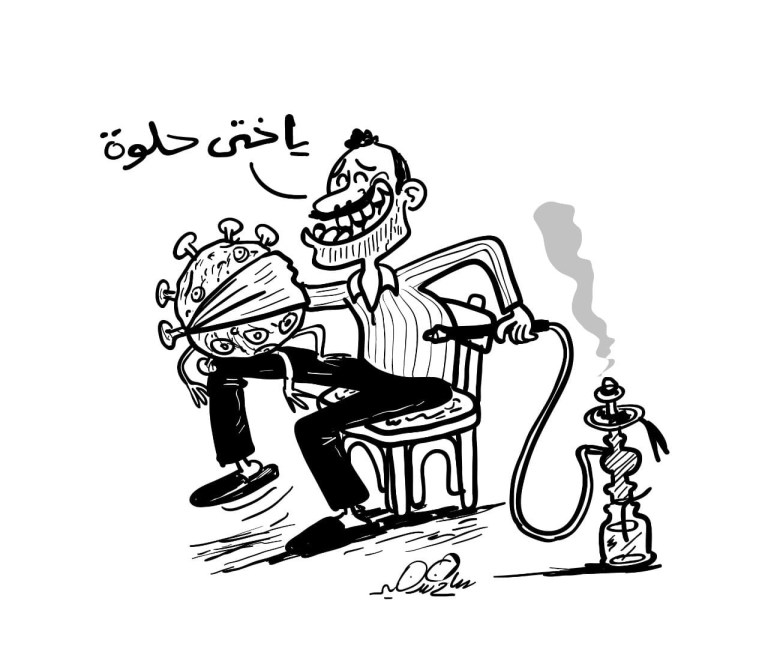
Humorous Cartoon of Man Admiring Virus Character in Egyptian Style
This cartoon by Sameh Cartoon humorously portrays a man sitting and admiring a virus character, using the Egyptian Arabic phrase 'ياختي حلوة' meaning 'Oh my, how beautiful!'. The artwork uses light comedy to reflect on the social atmosphere around viruses in Egypt, blending humor with community context.
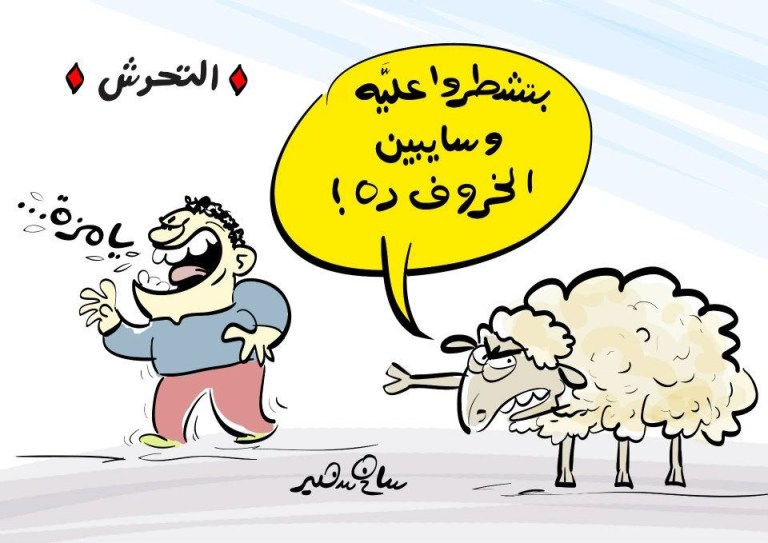
Satirical Cartoon on Harassment During Eid Al-Adha and the Wrongly Accused Sheep
This cartoon by Sameh Cartoon highlights the harassment phenomenon in Egyptian society during Eid Al-Adha with sharp satire. The sheep ironically points out how innocent victims are blamed while real harassers remain unpunished. It strongly criticizes the misuse of the term "sheep" against innocents and the societal failure to hold true offenders accountable during the festive period.
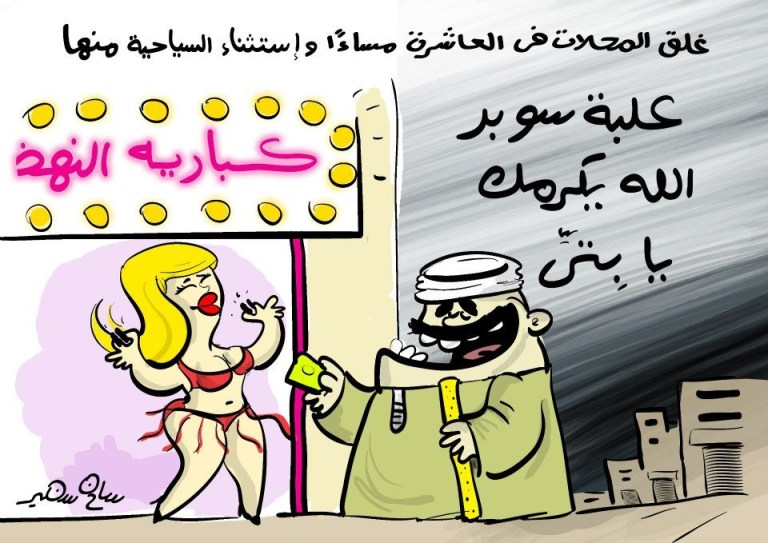
Funny Cartoon on Cairo’s 10 PM Shop Closing and Nightlife Paradox
This cartoon humorously captures Cairo’s paradoxical nightlife where shops close at 10 PM except tourist venues like nightclubs. A traditional man in galabeya tries to buy a pack of Super cigarettes from a dancer instead of a kiosk, highlighting the irony of the city that never sleeps but restricts regular shops. The scene uses Egyptian dialect humor to emphasize this social contradiction.

Funny Egyptian Cartoon on Verbal Irony in Microbus Fare Collection
This cartoon humorously illustrates the verbal paradox common in Egyptian microbus culture, where the phrase 'Take one from the back!' is used innocently to mean paying fare from the back seat, but also has a risqué connotation. The driver's surprised reaction perfectly captures this playful linguistic clash, making it a relatable and amusing scene for Egyptian audiences.
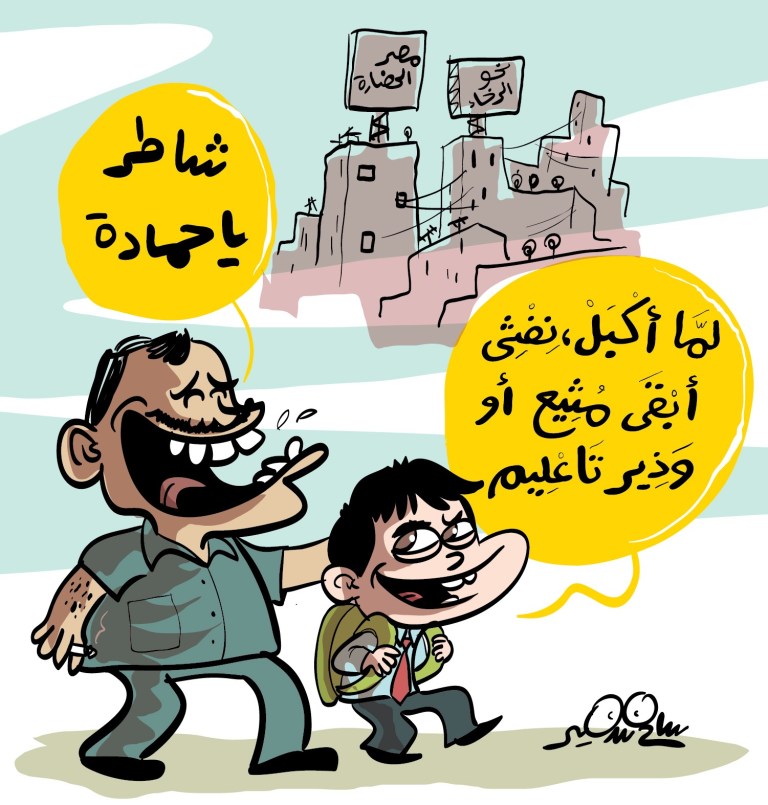
Satirical Cartoon on Egypt’s Education System and Minister
This cartoon humorously critiques Egypt’s public education system by showing a boy making multiple language mistakes while saying, “When I grow up, I want to be a news anchor or education minister,” written with errors. His proud father praises him, underscoring the irony. Background banners read “Egypt Civilization” and “Towards Prosperity,” emphasizing the contrast between official slogans and educational realities.
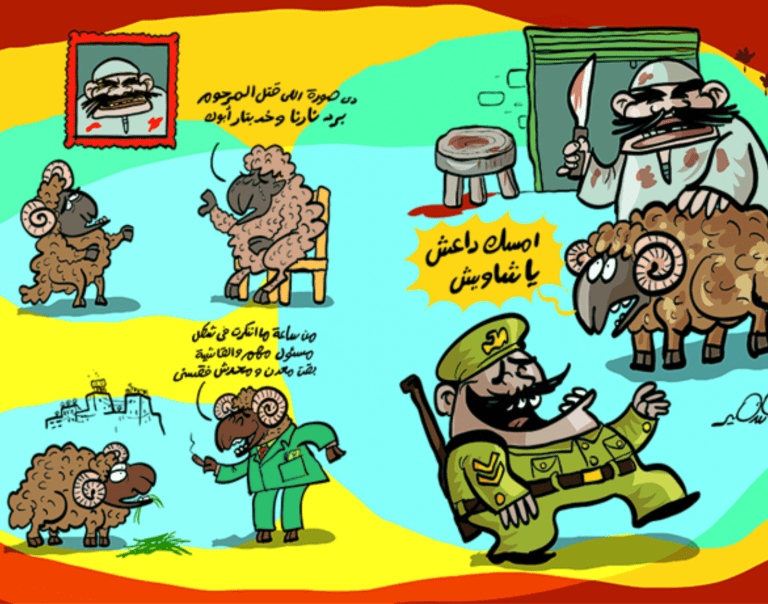
Satirical Cartoon on Eid al-Adha Highlighting Sheep Paradoxes and Corruption
This 2013 cartoon uses the symbolism of sheep during Eid al-Adha to satirize social and political issues in Egypt, including the rise of ISIS, calls for revenge, and corruption disguised as official authority. The butcher sheep, the grieving mother, and the sheep in a suit reflect deep societal paradoxes and critique of leadership.
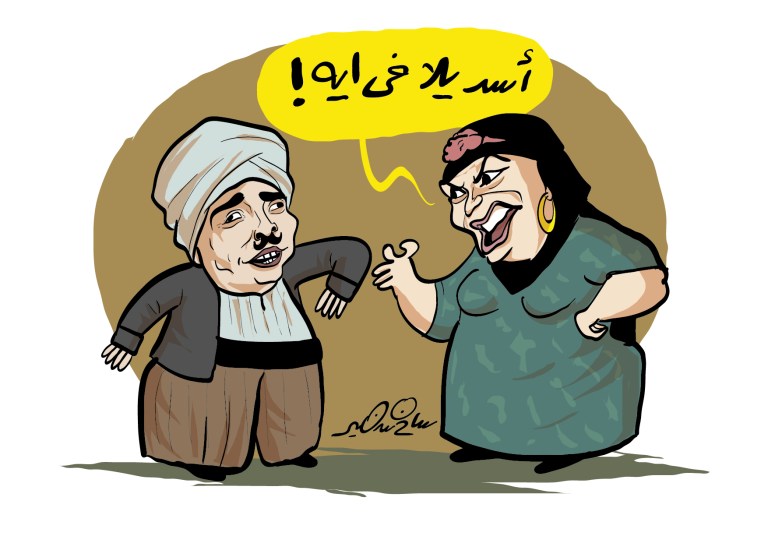
Famous Scene from Egyptian Comedy Film Ibn Hamido with Modern Twist
This cartoon captures a well-known scene from the Egyptian comedy film Ibn Hamido featuring Abdel Fattah El Qasri. The husband appears frightened of his wife, who surprises him with a contemporary humorous phrase, blending classic cinema with modern humor. The artwork is attributed to Sameh Samir.
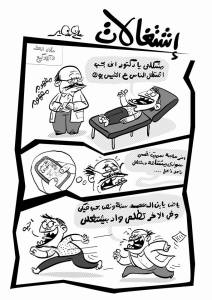
Comic About a Man Who Loves Pranking People and Tricks His Therapist
This comic humorously depicts a man who enjoys playing pranks on others, including his therapist. He pretends to be a woman named Suzy to flirt with a foolish man, only for the therapist to discover he was the victim of the prank for a year and a half. The comic highlights playful deception and unexpected twists in social interactions.

Humorous Cartoon About Appreciating Intelligence Over Appearance
This cartoon humorously captures a playful exchange where a man compliments a woman’s intelligence rather than her appearance. The joke reflects a lighthearted cultural reference appreciated in Egyptian humor. It emphasizes wit and the value of brains in social interactions.
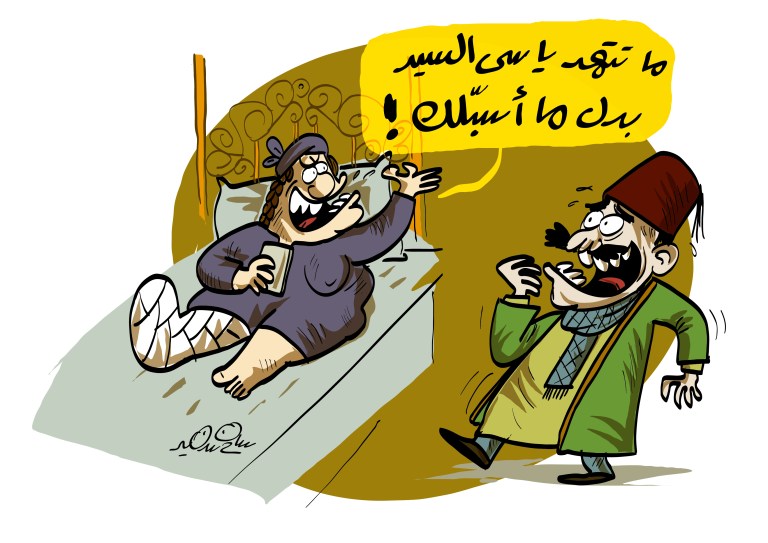
Modern Take on 'Between Two Palaces' Highlights Changing Gender Dynamics
This cartoon by Sameh Samir offers a contemporary perspective on the classic film 'Between Two Palaces,' showing a wife who challenges her husband's traditional dominance after she breaks her leg. The wife warns him not to threaten her, reflecting evolving gender roles in Egyptian society with a comedic tone.

Super Mr. Ramadan Cartoon Celebrating the Festive Spirit
This cartoon features Super Mr. Ramadan, a playful superhero character celebrating the Ramadan festivities in an Egyptian urban environment. The illustration captures the joyful and communal spirit of Ramadan with humor and lightheartedness.
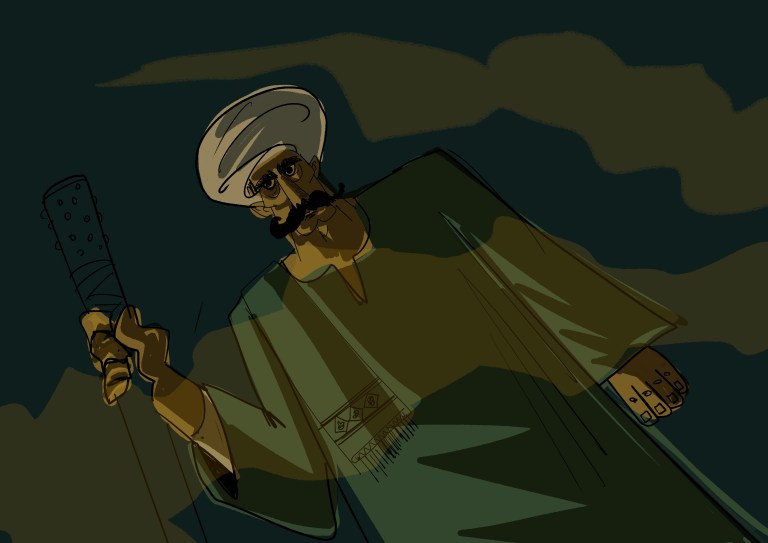
Cartoon of a Man from Upper Egypt in Traditional Dress
This cartoon by Sameh Cartoon features a man from Upper Egypt dressed in traditional clothing, highlighting cultural attire in a simple and clear style. The illustration focuses on regional identity through traditional dress.
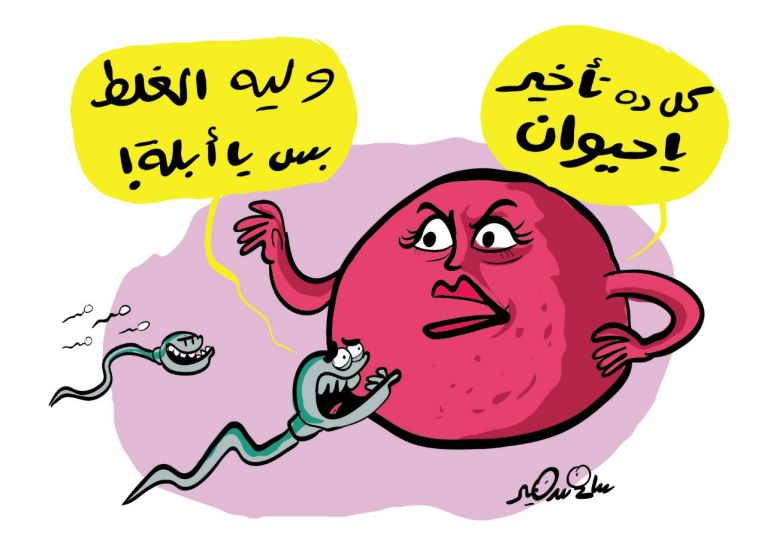
Playful Cartoon of Egg Scolding Late Sperm with Egyptian Slang
This cartoon by Sameh Samir humorously depicts an egg character scolding a late sperm, calling him 'animal' in Egyptian slang. The joke plays on the double meaning of 'animal' as both an insult and the biological term for sperm, reflecting Egyptian cultural humor.
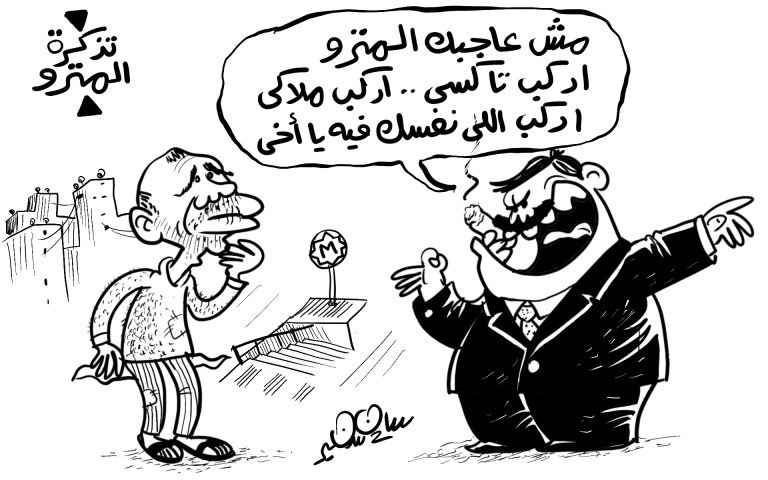
Poor Citizen Complains About Cairo Metro Fare Hike, Official Unmoved
This cartoon illustrates a poor citizen's objection to the increased Cairo metro ticket prices. The official responds with indifference, sarcastically telling him to take a taxi or private car if he dislikes the metro. It highlights social frustration over public transport costs in Egypt with a satirical tone.
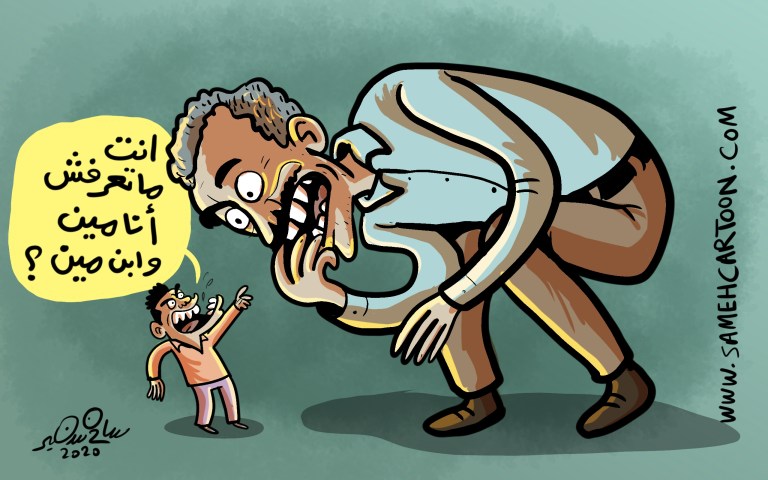
Cartoon on Egyptian Social Value Based on Family and Influence
This cartoon illustrates a small man demanding respect by emphasizing his family background and connections, highlighting the Egyptian societal tendency to judge people by their wealth and relationships instead of their personal value. The surprised reaction of the other man underscores the inverted social values.
Explore more editorial cartoon collections by Sameh Samir
Artwork and editorial cartoons by Sameh Samir. All rights reserved.